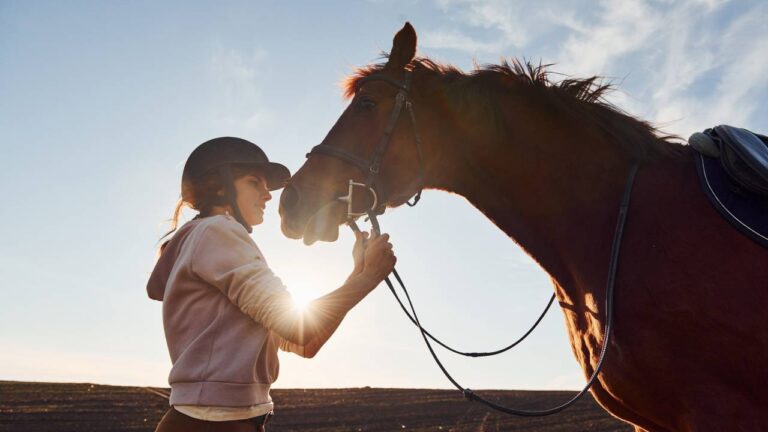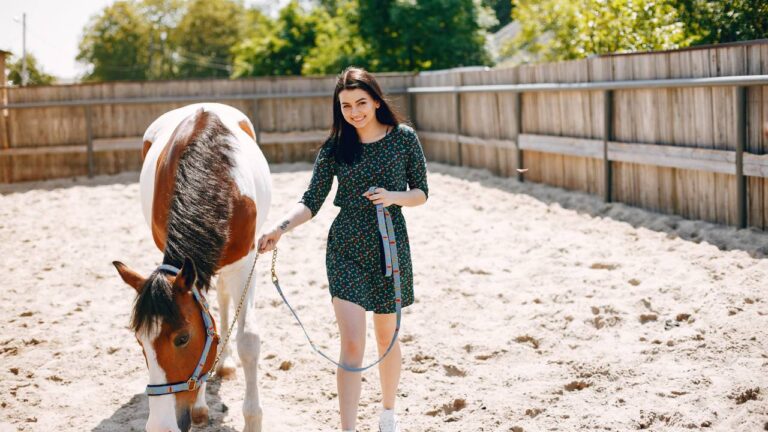
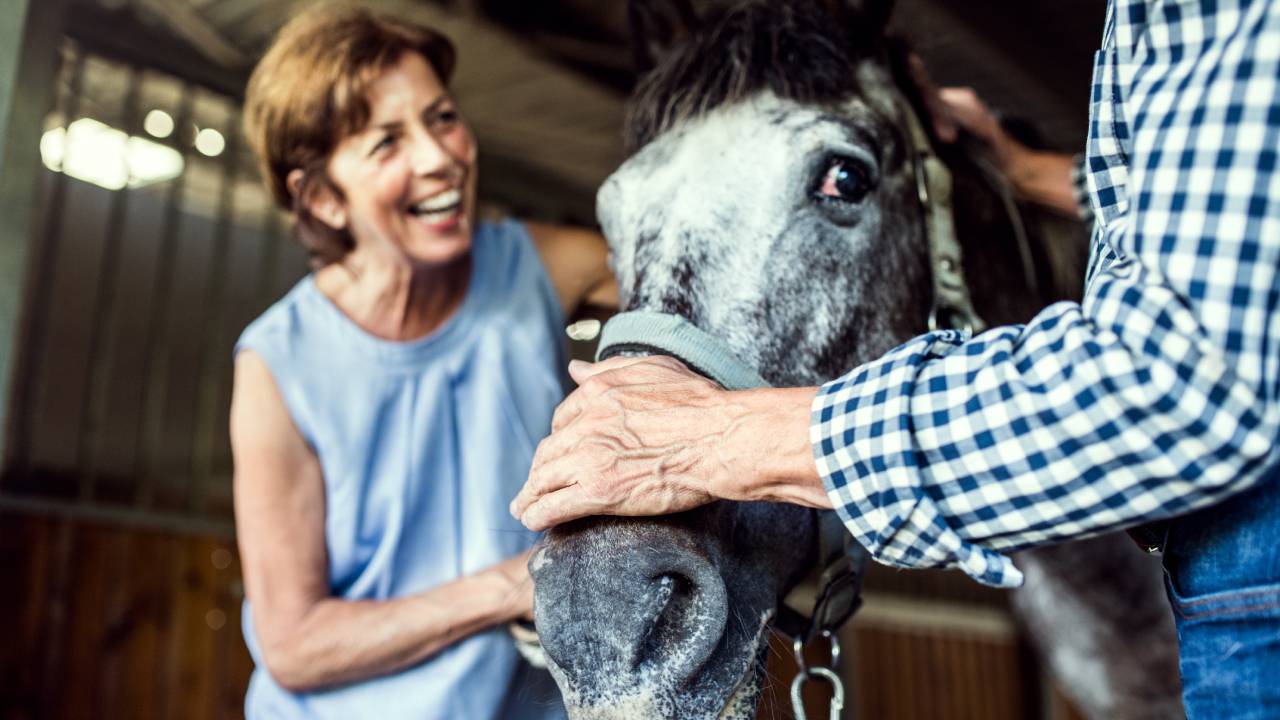
Most people assume equine therapy involves learning to ride horses. It doesn’t. What happens in an equine therapy session is something far more clinically structured, and for people in addiction recovery, far more therapeutically precise than a trail ride could ever be.
What Equine Therapy Is and Why It Works
Equine-assisted therapy is a licensed clinical intervention conducted by a credentialed mental health professional working alongside a certified equine specialist. The horse is not a prop or a reward. The horse is a co-therapist in the literal sense: an animal whose behavioral responses generate real-time data about your emotional state that a traditional therapy room cannot produce.
A 2020 study published in the Journal of Rehabilitation found that participants in equine-assisted psychotherapy showed statistically significant reductions in anxiety, depression, and PTSD symptoms compared to control groups receiving only standard outpatient care. The sample included 149 adults, tracked over 12 weeks. The mechanism isn’t mystical: horses are prey animals with an acutely calibrated nervous system that reads threat signals in the environment. Your body language, heart rate, and tension register immediately. The horse responds, and that response becomes the therapeutic material.
If you want a fuller picture of how this process works across a full course of treatment, the clinical logic runs deeper than a single session can capture.
What You Need Before Your First Session
Arriving prepared is not about impressing the horse. It’s about protecting yourself and getting more out of the experience from the first session forward.
Wear closed-toe shoes with a low heel, long pants, and clothes you’re comfortable moving in. Leave perfume or strong-smelling products at home. Horses are sensitive to unfamiliar scents and respond to them. Beyond clothing, the more important preparation is informational.
How to Talk to Your Treatment Team Beforehand
Before your first session, your therapist and equine specialist need specific information from you: current medications (particularly anything that affects motor coordination or emotional blunting), any relevant trauma history involving animals or physical environments that feel unsafe, and at least one concrete goal you want the session to move toward. “I want to feel better” is not a goal. “I want to practice asking for something without apologizing for it” is a goal the team can build an exercise around.
Be direct about physical limitations, too. If you have a bad knee, a shoulder injury, or chronic pain, the equine specialist adjusts the session accordingly. Withholding this information doesn’t make the session more challenging; it makes it less safe.
What the Facility Provides vs. What You Bring
Certified equine therapy programs supply helmets, grooming tools, halters, leads, and guidance on which horse is appropriate for your session goals. You don’t need to own anything, know anything about horses, or have been near one before. What you bring is honesty about your current state, a willingness to stay present when things feel uncomfortable, and the goal you’ve already shared with your therapist.
Step 1: Complete the Pre-Session Intake and Safety Briefing
Every session opens with a structured intake check-in. Your licensed therapist briefly assesses your current emotional state, sleep, and any significant events since your last session. This isn’t small talk. A 2019 study in Frontiers in Psychology found that pre-session emotional attunement between therapist and client improved therapeutic alliance scores by 34% across experiential modalities, including equine-assisted work.
The equine specialist then runs a safety briefing covering how to move near the horse, where to stand, and what to do if the horse becomes agitated. Follow these instructions exactly. They are not formalities.
Step 2: Enter the Arena and Meet Your Horse
You enter the arena and observe the horse before any contact. Don’t approach immediately. Watch how the horse moves, where it positions itself, and whether it orients toward you or away. Your therapist watches both of you during this phase.
What looks like an informal introduction is actually the first therapeutic data point of the session. The horse’s initial response to your presence tells your treatment team something about the energy you’re carrying into the space, before a single word has been spoken.
What the Horse Is Actually Responding To
A 2016 study by researchers at the University of Pavia found that horses accurately identify human emotional states from facial expressions and body posture, with measurable heart rate changes in the horse corresponding to perceived human stress. Your cortisol level, your muscle tension, your breathing pattern: the horse reads all of it.
What this means in practice is that the horse’s behavior is a mirror. If the horse keeps distance, that’s not rejection. It’s information. If the horse moves toward you, that’s also information. Your therapist is trained to translate these responses into questions that open the session’s clinical work.
Step 3: Begin Ground-Based Activities with Your Treatment Team Present
Ground-based activities are the core of most equine therapy sessions in addiction recovery programs. These include grooming, haltering, leading the horse through a simple path, and navigating basic obstacles on foot. None of these are riding exercises. Each is a structured clinical intervention targeting specific therapeutic goals: trust-building, frustration tolerance, assertive communication, and boundary-setting.
If you want to understand how these activities fit alongside other non-traditional approaches in treatment, the broader category of experiential therapy follows the same logic: put the person in a real situation, and real patterns emerge.
How the Therapist and Equine Specialist Work Together in This Phase
The licensed mental health professional and the certified equine specialist have clearly defined, non-overlapping roles. The equine specialist manages the physical safety of the session and monitors the horse’s behavior and welfare. The therapist observes your responses without intervening in the activity itself. Neither role interrupts the other, and neither interrupts you while the activity is unfolding. The silence is intentional.
What Specific Behaviors the Team Is Watching For
Your therapist watches how you handle uncertainty: do you freeze, over-explain, withdraw, or push through with force? The equine specialist watches the horse for behavioral confirmation. If you’re asking the horse to move forward and you’re physically tense and verbally uncertain, the horse plants. That pattern is exactly what shows up in relationships and in early recovery. The team sees it clearly because the horse makes it visible in real time.
Step 4: Process What Happened in Real Time
Midway through the session or immediately after a specific activity, your therapist pauses the physical work and processes what just happened. This is not optional. A 2018 study in the Journal of Experiential Education found that structured verbal processing immediately following an experiential activity increased insight retention by 41% compared to debrief at the end of a session alone.
Questions Your Therapist Is Likely to Ask
Expect questions like: “What were you feeling in your body when the horse stopped?” “What did you tell yourself in that moment?” “Where have you felt that exact feeling before?” “What did you want to do that you didn’t do?” These questions aren’t random. They’re designed to connect the present moment with patterns that predate your addiction, because for most people, those patterns are where the real work lives.
Step 5: Work Through a Targeted Therapeutic Exercise
Most sessions include one structured exercise built specifically around your treatment goals. The exercise is the primary clinical intervention of the session, not a bonus activity layered on top of something else.
Common Exercises Used in Addiction Recovery Programs
Four exercises appear consistently across equine therapy programs serving people in substance use recovery. In the “Catch and Release” exercise, you attempt to catch a loose horse in the arena without using food. This targets control, patience, and the ability to tolerate failure without abandoning the goal. In the “Leading Through Obstacles” exercise, you guide the horse through a simple course, which targets assertiveness and nonverbal communication. The “Grooming in Silence” exercise develops presence and attunement. Finally, boundary-setting exercises where you ask the horse to stop or back up target the exact skill many people in early recovery have never practiced with another living being.
The horse’s response to each exercise tells your therapist whether the skill is developing or whether the old pattern is still running the show.
Step 6: Close the Session with a Structured Debrief
The closing debrief is a non-negotiable part of the session. Research on experiential learning consolidation, including a widely cited 2017 meta-analysis in Educational Psychology Review covering 98 studies, confirms that without a structured close, experiential insight dissipates rapidly and fails to transfer to other contexts.
You sit with your therapist, name one specific moment from the session, and connect it explicitly to a recovery goal. Not a general feeling. A specific moment.
How to Make the Most of Your Debrief Time
Identify the one moment during the session when you felt the most uncomfortable and describe it precisely. Not “I felt anxious.” Instead: “When the horse turned away from me after I’d been standing there for two minutes, I felt my face flush and I wanted to leave.” That level of specificity gives your therapist the material to make the debrief genuinely useful rather than a summary of what you already know you felt.
Step 7: Integrate the Session Into Your Broader Treatment Plan
Your therapist writes session notes that go directly into your treatment record and inform your individual therapy, group work, and any medication-assisted treatment you’re receiving. Equine therapy is not a standalone modality operating in its own lane. The patterns your therapist observes in the arena become discussion material in your next individual session and can shift the focus of your treatment goals when progress is visible.
For people in residential programs, the role this plays within a full rehab setting is more integrated than most people expect before they arrive.
Troubleshooting: Common Concerns and How to Handle Them
What If You Are Afraid of Horses
Fear of horses is common and does not disqualify you from participating. In certified programs, fear is treated as clinical material, not an obstacle to clear before the real work begins. Therapists use graduated exposure, starting with observation at a distance and moving closer only as your window of tolerance expands. The fear itself, where it lives in your body, how it affects your thinking, what it reminds you of, becomes the subject of the session.
What If You Feel Like Nothing Is Happening
If equine therapy feels less structured than talk therapy, that perception is understandable. A 2021 study in the Journal of Traumatic Stress found that somatic and nonverbal processing pathways are often more accessible for people whose trauma or chronic substance use has disrupted verbal access to emotion. The work is happening. It’s happening in your nervous system before your prefrontal cortex catches up. Trust the process long enough to reach the debrief.
For more on why this approach is particularly well-suited to people navigating the intersection of trauma and substance use, the neurobiological overlap is significant.
What If the Horse Avoids You or Acts Out
Avoidance or agitation from the horse is not a sign of failure. It is clinically meaningful data. Your therapist treats it as direct material for the session, not an interruption to manage. The horse is responding to something real. The question the session then explores is what that something is and where it shows up elsewhere in your life.
What to Expect After Consistent Equine Therapy Sessions
A 2017 study published in the Journal of Substance Abuse Treatment followed 90 adults in residential addiction treatment who received equine-assisted psychotherapy as part of an integrated program over eight weeks. Participants showed significant improvements in emotional regulation, interpersonal trust, and treatment engagement compared to those receiving standard care alone. By week six, therapists noted observable changes in how participants communicated in group settings and responded to feedback.
In practice, what you’re likely to notice first is a shift in how you handle discomfort: not eliminating it, but pausing before reacting to it. That pause is the foundation everything else in recovery is built on.
What to Try Before Your Next Session
Contact the admissions team and ask directly whether equine therapy is included in the treatment program and what modality the program uses. Then name one goal you want to bring into that first session. One specific pattern you want to interrupt. One skill you’ve never been able to practice without shutting down. Walk in with that goal already formed, and the horse will give you somewhere real to work with it.