
Equine therapy for addiction is one of the most misunderstood treatment modalities in behavioral health, and also one of the most clinically compelling. If you’ve heard the term and pictured recreational trail rides, this guide will correct that picture entirely.
What Equine Therapy for Addiction Actually Means
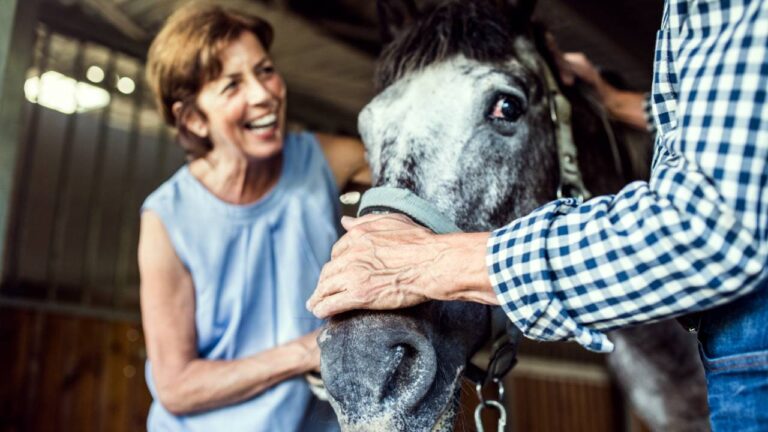
Equine-assisted psychotherapy (EAP) is a structured, evidence-based clinical intervention in which a licensed mental health professional uses interactions between a client and a horse to facilitate therapeutic work. Sessions happen entirely on the ground. No riding. No horse experience required. The horse is not a reward or a recreational distraction; it is an active participant in the therapeutic process, responding to your emotional state in real time.
The distinction matters because addiction treatment is not well served by activities that simply occupy time. EAP targets the emotional dysregulation, shame, denial, and attachment disruption that sit underneath substance use disorders. A 2020 study published in Frontiers in Psychology examining experiential therapies in addiction treatment found that modalities involving somatic and relational components produced measurably stronger engagement and retention outcomes than cognitive approaches alone. EAP delivers both: the body-based nervous system work and the relational framework, simultaneously, within a single session.
What Happens During a Session
Arriving at an equine therapy session for the first time, you go through a brief safety orientation covering how to move around horses, read their body language, and stay calm in their presence. From that point, the session moves into groundwork: leading a horse through an obstacle course, grooming it, or simply standing in its presence and observing what happens. The tasks sound simple. They are not.
Every groundwork activity creates a live scenario the therapist can use. If you approach the horse with anxiety and the horse backs away, that response becomes material. If you try to force the horse to move and it plants its feet, that becomes material too. The interaction is unscripted, which is exactly the point.
After the groundwork portion, the licensed therapist guides a debrief. This is where the clinical work crystallizes: the therapist draws connections between what happened with the horse and patterns in your relationships, your recovery, or your response to stress. For a detailed breakdown of how these sessions unfold in a residential setting, the structure is consistent regardless of program length.
The Mirror Effect: Why Horses Work as Therapists
Horses are prey animals. Their survival depends on reading the emotional states of other animals, including humans, with extraordinary accuracy. They detect changes in heart rate, muscle tension, breathing patterns, and posture. They respond to what you actually feel, not what you present verbally.
A 2018 study published in Animal Cognition by researchers at the University of Sussex found that horses distinguish human emotional expressions and adjust their behavior accordingly, showing measurably different stress responses to photographs of angry versus happy human faces. The mechanism is not magical; it is neurobiological. Horses operate from their autonomic nervous system, and they react to yours.
For someone in early addiction recovery, where denial is a primary psychological defense, this creates a situation that cannot be performed around. You can tell a therapist you are fine. You can maintain that position across an hour of talk therapy. The horse will not confirm the performance. If your nervous system is dysregulated, the horse reflects it back immediately, without judgment and without an agenda. That feedback loop breaks through denial faster than conversation alone, which is why EAP is particularly effective in early treatment when resistance is highest.
What the Therapist Is Actually Doing
Every EAP session is led by a licensed mental health professional, often alongside an equine specialist. The therapist is not watching you interact with a horse and hoping something therapeutic happens. The therapist is doing active clinical work, observing your body language, your approach style, your frustration tolerance, and your capacity for repair when the interaction breaks down.
The horse interaction generates what therapists call “live material”: behaviors and emotional responses that emerge organically and reflect the same patterns driving addictive behavior. Shame, control, avoidance, hypervigilance, and difficulty asking for help all surface in the arena in concrete, observable form. The therapist uses these moments to connect the interaction to your treatment goals, trauma history, and relapse triggers in real time. This is structured clinical work, not animal-assisted recreation. The difference between EAP and a pleasant barn visit is the licensed clinician turning what just happened into a therapeutic intervention.
The Evidence Behind It
The most frequently cited research on EAP and addiction comes from Norwegian researcher Ann Kern-Godal and colleagues, whose qualitative study published in BMC Psychiatry examined long-term residential treatment patients who participated in equine-assisted therapy alongside standard treatment. The finding that drew the most attention: patients who engaged in EAP reported higher treatment motivation and a stronger sense of identity outside the addict role, two factors strongly correlated with sustained recovery.
A separate 2021 systematic review in the Journal of Psychoactive Drugs analyzed multiple EAP studies and found that equine-assisted interventions were associated with reduced anxiety, improved emotional regulation, and stronger therapeutic alliance, all measured outcomes relevant to addiction recovery. The sample sizes in EAP research remain smaller than pharmaceutical trials, which skeptics rightly note. But the consistency of findings across independent studies, different populations, and different countries is notable.
For someone choosing between treatment programs, the practical takeaway is this: when you call a center offering equine therapy, ask how the sessions are documented, how outcomes are tracked, and how the equine component connects to the primary treatment plan. A well-run program has clinical answers to all three questions.
Core Benefits of Equine Therapy for Addiction
The research documents five shifts that clients consistently report and clinicians consistently observe across EAP programs.
Rebuilding Emotional Regulation
Addiction hijacks the brain’s stress-response system. Substances become the primary tool for managing anxiety, anger, boredom, and pain. After years of chemical regulation, the nervous system loses its capacity to self-regulate without a substance. Equine therapy works directly on that deficit.
A 2017 study in Substance Abuse Treatment, Prevention, and Policy found that clients participating in EAP alongside standard addiction treatment showed significant reductions in anxiety and improvements in emotional regulation compared to treatment-as-usual controls. The mechanism is straightforward: standing next to a 1,200-pound animal that demands genuine calm, not performed calm, trains your nervous system to regulate in real time. After six weeks of regular sessions, clients typically report that the physiological shift they practiced in the arena starts showing up in daily life, lower reactivity, better distress tolerance, and the ability to pause before responding. This is the kind of emotional healing that horse therapy targets that talk therapy alone cannot always reach.
Breaking Through Denial and Shame
Denial is not a character flaw. It is a cognitive defense mechanism, and it is extraordinarily common in early addiction treatment. The problem is that it also blocks the self-awareness required for recovery. EAP works around denial because the horse responds to non-verbal cues the client cannot consciously control. You cannot convince the horse you are emotionally regulated when you are not.
Clinical reports from EAGALA-certified programs describe consistent observations: clients who have maintained denial for months in traditional therapy begin acknowledging emotional states within a few EAP sessions, prompted not by confrontation but by the horse’s honest feedback. The shame that accompanies addiction also loosens in this context. The horse does not know your history. It responds to who you are right now, in this moment, which creates an opening for self-compassion that is difficult to manufacture through verbal therapy.
Rebuilding Trust and Healthy Attachment
Research consistently links insecure attachment to substance use disorders. A 2019 meta-analysis in Drug and Alcohol Dependence found that insecure attachment styles were significantly more prevalent in people with alcohol and drug use disorders than in the general population. Horses are relational animals that respond to consistency, patience, and authentic presence. Building a working relationship with a horse across multiple sessions is, neurologically speaking, a rehearsal for rebuilding human relationships.
The skill being practiced is not abstract. It is learning to approach another being without aggression or manipulation, to repair the relationship when communication breaks down, and to tolerate the discomfort of not being in control. Those are exactly the capacities that addiction erodes in human relationships, and they are directly trainable through equine work.
Restoring a Sense of Identity and Purpose
The Kern-Godal study’s qualitative data produced one finding that stands apart from the clinical metrics. Patients described the stable as a place where they could discover “who I really am” outside the identity of addict or patient. One participant described it as “the only place I forget why I’m here.”
That matters enormously for long-term recovery. Sustained sobriety depends not just on stopping substance use but on building an identity that does not need substances. The stable provides a context where competence is real, responsibility is tangible, and the role of caregiver replaces the role of person who needs care. That identity shift, small as it sounds, is a significant factor in motivation for the long term.
Who Benefits Most From Equine Therapy
EAP shows the strongest outcomes in specific populations. Individuals with co-occurring trauma or PTSD represent the clearest fit: a 2021 review in European Journal of Psychotraumatology found EAP produced significant reductions in PTSD symptom severity across multiple studies, which matters because trauma and addiction are deeply entangled conditions. Veterans are another population where the evidence is particularly strong, with several VA-affiliated programs documenting measurable reductions in PTSD and substance use symptoms. Adolescents, who often resist talk therapy but engage readily with animals, and adults who have not responded to multiple rounds of traditional treatment are also strong candidates.
Equine therapy and trauma often go together in treatment settings precisely because the approach addresses the nervous system dysregulation that underlies both conditions simultaneously. That said, EAP is a complement to a full treatment plan, not a standalone intervention. It works alongside evidence-based approaches like CBT, EMDR, and medication-assisted treatment, not instead of them.
Common Misconceptions About Horse Therapy in Rehab
Three objections come up consistently, and all three are worth addressing directly.
The first is that you need riding experience or comfort around animals. You do not. EAGALA-model EAP is entirely ground-based. Sessions never involve riding, and equine specialists are present to ensure safety at every session regardless of your prior experience with animals.
The second objection is that this is a fun activity dressed up as therapy. The clinical structure disproves this. Every EAP session in a properly credentialed program is designed, documented, and led by a licensed mental health professional. The Equine Assisted Growth and Learning Association (EAGALA) requires a licensed therapist present for every session. The work is no less rigorous than a traditional therapy session; the medium is different.
The third objection concerns insurance coverage. When equine therapy is bundled into a residential or intensive outpatient program, PPO plans including Aetna, BCBS, Humana, Magellan, and Optum frequently cover it as part of the overall treatment program cost rather than as a standalone line item. The session is not billed separately as “equine therapy” but as part of a licensed residential or outpatient treatment day. Call the benefits number on the back of your insurance card and ask specifically: “Does my plan cover experiential therapy within a licensed residential addiction treatment program?” That question gets a clearer answer than asking about equine therapy by name.
How to Find an Addiction Program That Includes Equine Therapy
Four things separate a clinical equine therapy program from a barn visit. First, confirm that a licensed mental health professional, not just a horse handler or equine specialist, leads every session. Equine specialists are valuable partners, but the clinical authority in the room must be a credentialed therapist.
Second, ask how EAP integrates with the primary treatment plan. In a well-structured program, what happens in the arena connects directly to what happens in individual and group therapy. If the program cannot explain that integration clearly, the equine component is likely supplemental rather than clinical. For a full picture of what residential programs that include equine work actually look like, the integration question is the most important one to ask.
Third, verify that the program holds EAGALA or PATH International certification. These organizations set training standards for both the equine specialist and the mental health professional. Certification is not a guarantee of quality, but its absence is a signal worth noting.
Fourth, confirm whether equine therapy is included in the residential program rate or billed separately. Separate billing for each session can create a significant out-of-pocket cost that was not apparent during the admissions conversation. Get clarity on this before you commit.
The Question That Separates Clinical Programs from Barn Visits
Call one treatment center today and ask two questions: “Is your equine therapy program led by a licensed clinician in every session?” and “Is it included in my program cost?” A program with a genuine clinical equine component answers both questions without hesitation. If the answer to either is unclear or evasive, you have your answer about how seriously that program treats EAP as a clinical tool.