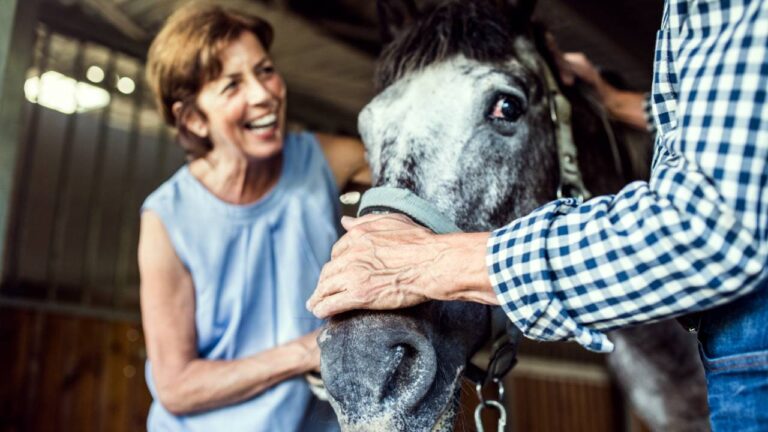
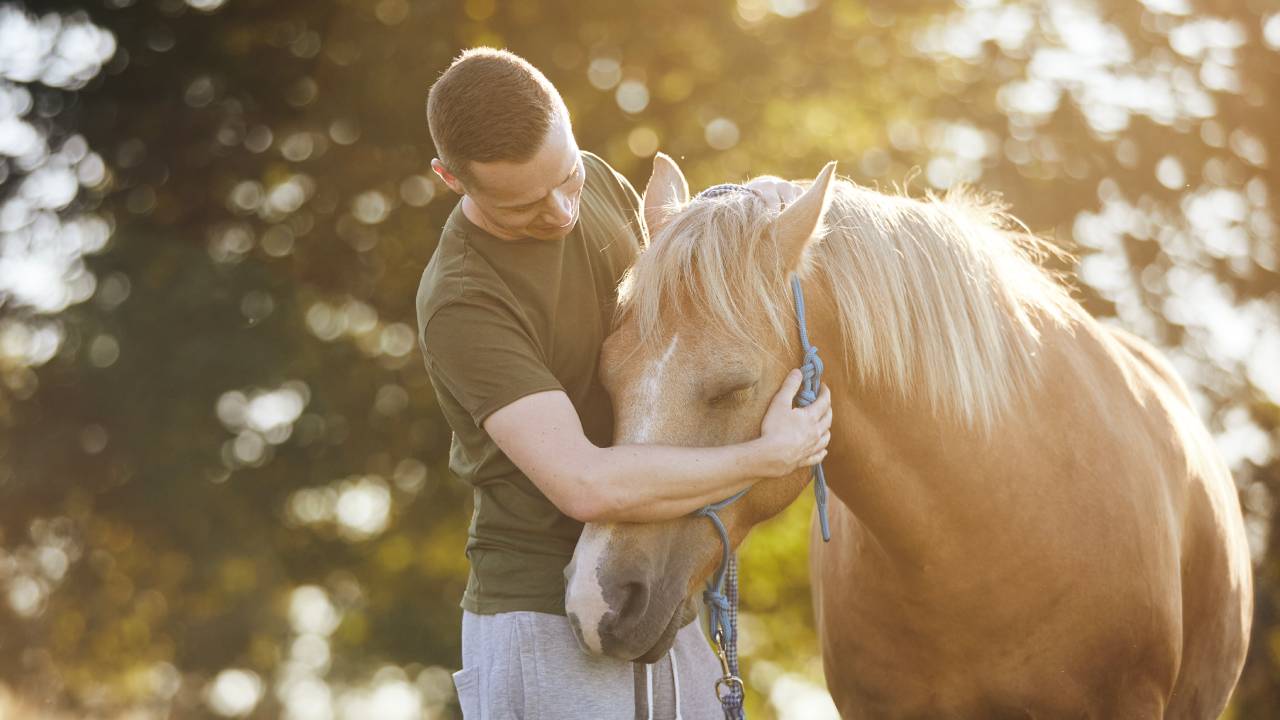
Recovery research consistently finds that talk therapy alone leaves a significant gap: a 2021 review published in Substance Abuse Treatment, Prevention, and Policy noted that engagement and retention drop sharply when treatment relies exclusively on verbal, office-based interventions. Equine assisted therapy benefits people in recovery precisely because it works through a different channel entirely, engaging the nervous system, the body, and emotional awareness in ways that a therapy room rarely can. What follows is a clinically grounded look at seven specific mechanisms that make this modality worth taking seriously.
1. Horses Provide Immediate, Unfiltered Emotional Feedback
A 2016 study from the University of Guelph, published in Biology Letters, documented that horses read human facial expressions and body language with measurable accuracy, distinguishing between positive and negative emotional states in people they had never met. Their response is neurological and automatic. Horses can’t be charmed, manipulated, or convinced that you’re fine when you’re not.
What this means in a clinical setting is that a horse becomes a live feedback mechanism for your internal state. If you walk into the arena flooded with anxiety you haven’t named yet, the horse shifts, moves away, or refuses to engage. That response happens before your prefrontal cortex has processed what’s going on. For someone in early recovery, whose entire history may involve suppressing or masking emotional states, this kind of mirror is genuinely novel. You get honest data about yourself from a source that has no agenda.
In a first session, this typically looks like a moment of confusion followed by recognition. You approach the horse, the horse moves off, and the facilitator asks a simple question: what were you feeling just before that happened? The answer usually surprises people. That’s the whole point.
2. It Rebuilds Trust Without Requiring Words
Research from the EAGALA (Equine Assisted Growth and Learning Association) model, applied across clinical programs including VA-affiliated treatment for veterans, consistently shows that equine-assisted sessions accelerate trust-building in populations where human relationships have become unsafe. The mechanism isn’t complicated: a horse doesn’t know your history, doesn’t hold a grudge, and doesn’t have an agenda tied to your behavior.
For people whose trauma involves betrayal, exploitation, or attachment disruption, and that profile appears frequently in addiction recovery, the prospect of trusting another person is genuinely threatening. A horse sidesteps that threat entirely. Building a working relationship with the animal requires honesty and regulation, not persuasion or performance. You can’t talk your way into the horse’s cooperation. You have to earn it through consistent, calm, present behavior.
This makes equine therapy particularly well-matched for the trust repair that addiction damages, not just with others but with yourself. If you’re curious about how the sessions themselves are structured and what that trust-building process looks like in practice, the step-by-step progression is worth understanding before you commit to a program.
3. It Reduces PTSD Symptoms and Trauma-Driven Relapse Risk
A Columbia University Department of Psychiatry study, published in the Journal of Traumatic Stress, found that veterans who participated in equine-assisted therapy showed marked reductions in both PTSD and depression symptoms compared to those receiving standard care alone. The sample was veterans, but the mechanism applies broadly: unresolved trauma dysregulates the nervous system, and that dysregulation is one of the most reliable predictors of relapse.
The connection between trauma and addiction is not incidental. According to SAMHSA, more than half of people with a substance use disorder also meet criteria for a co-occurring trauma-related condition. Standard trauma treatment approaches, particularly verbal processing methods, can struggle with patients who are physiologically unable to stay regulated during the session. Equine therapy offers an alternative pathway: the nervous system gets a regulated, embodied experience it can actually integrate, rather than being asked to verbally recount what it survived.
The practical implication for anyone researching treatment: if trauma is part of your history, ask any prospective program directly whether their equine component is trauma-informed and whether the facilitators hold credentials in both equine-assisted work and mental health practice. EAGALA certification paired with a licensed therapist is the standard to look for. You can read more about the specific intersection of trauma and addiction that equine therapy addresses to understand why this combination matters clinically.
4. It Builds Accountability Through Real Consequences
A 2018 study published in the Journal of Addictions Nursing examined outcomes in residential treatment programs incorporating equine-assisted therapy and found statistically significant improvements in self-reported accountability and follow-through compared to control groups receiving standard programming. The mechanism is direct: horses respond to behavior, not intention.
If you rush through a grooming task, the horse reacts. If you’re distracted and inconsistent, the horse loses confidence in your leadership. If you’re patient and clear, the animal responds with cooperation. The cause-and-effect loop is honest and immediate in a way that most therapeutic environments are not. There’s no way to intellectualize your way through it or convince the horse to overlook poor follow-through.
This matters for recovery because accountability in early sobriety is often abstract. Sponsors, treatment teams, and family members can absorb a certain amount of inconsistency before consequences appear. The arena doesn’t work that way. The lesson transfers: the same regulation and consistency the horse requires is exactly what your support network needs from you, just with a longer timeline before the feedback arrives.
5. It Improves Emotional Regulation and Stress Response
Research published in Frontiers in Psychology in 2020, examining physiological markers across equine-assisted therapy sessions, found significant reductions in cortisol levels and improvements in heart rate variability among participants compared to baseline. These aren’t self-reported outcomes; they’re measurable changes in the body’s stress response system.
Chronic stress dysregulation sits at the core of substance use for many people. The nervous system has learned to treat discomfort as an emergency, and substances become the fastest available intervention. Grooming, leading, and working with a horse activates the parasympathetic nervous system through physical engagement, the same neurological target that mindfulness and breathwork aim for, but accessed through movement and sensory contact rather than seated practice. For people who find meditation impossible or talk-based relaxation techniques ineffective, this is a genuinely different entry point.
A single equine session can reset a stress-response pattern that weeks of cognitive work has failed to shift. That’s not an argument against cognitive therapy; it’s an argument for combining modalities. Understanding how experiential approaches fit into a full treatment plan gives you a clearer picture of why no single method is sufficient on its own.
6. It Strengthens Social and Communication Skills Damaged by Addiction
EAGALA model outcome data, gathered across multiple dual-diagnosis programs, documents consistent improvements in interpersonal functioning among participants, specifically in nonverbal communication, patience, and the ability to read relational cues. These are precisely the skills that active addiction erodes.
Addiction tends to narrow the social repertoire to whatever produces the desired outcome most quickly: manipulation, avoidance, or withdrawal. Working with a horse in a group setting asks for something different. You have to listen, observe, wait, and respond to a signal rather than force a result. When this happens alongside other people in recovery, the group dynamic becomes its own layer of practice.
What transfers out of the arena is concrete. The attunement you develop with the animal is the same attunement that makes family sessions more productive, group therapy more honest, and sober support relationships more durable. The social repair isn’t symbolic; it’s practiced.
7. It Addresses the Mind-Body Disconnect That Fuels Relapse
Bessel van der Kolk’s research, detailed in The Body Keeps the Score, established that trauma and addiction are not primarily cognitive problems. They live in the body, in patterns of sensation, shutdown, and dysregulation that talking about them does not automatically resolve. Body-based interventions consistently outperform talk therapy alone for populations where the nervous system has been the primary site of damage.
Equine therapy is fundamentally somatic. To communicate with a 1,200-pound animal, you have to be present in your body, reading its signals through your own physical awareness, adjusting your posture, breathing, and movement in real time. There’s no option to dissociate and still be effective. That embodied presence becomes a skill you develop through repetition, not a concept you accept intellectually.
For people whose substance use was a way of leaving their body, this is the reversal the other modalities can’t fully provide on their own. If you want to understand whether this kind of work is actually supported by outcomes data, the evidence on whether equine therapy is effective for addiction addresses that question directly.
One Call That Can Change the Shape of Your Recovery
Contact an addiction treatment center today and ask two specific questions: whether equine assisted therapy is part of their formal programming, and what clinical credentials their equine facilitators hold. EAGALA certification combined with a licensed mental health clinician is the minimum standard. This is a five-minute call that tells you immediately whether a program treats equine therapy as a clinical modality or a weekend activity. That distinction matters, and knowing it before you enroll puts you in a much better position to choose care that actually addresses the full scope of what you’re dealing with.