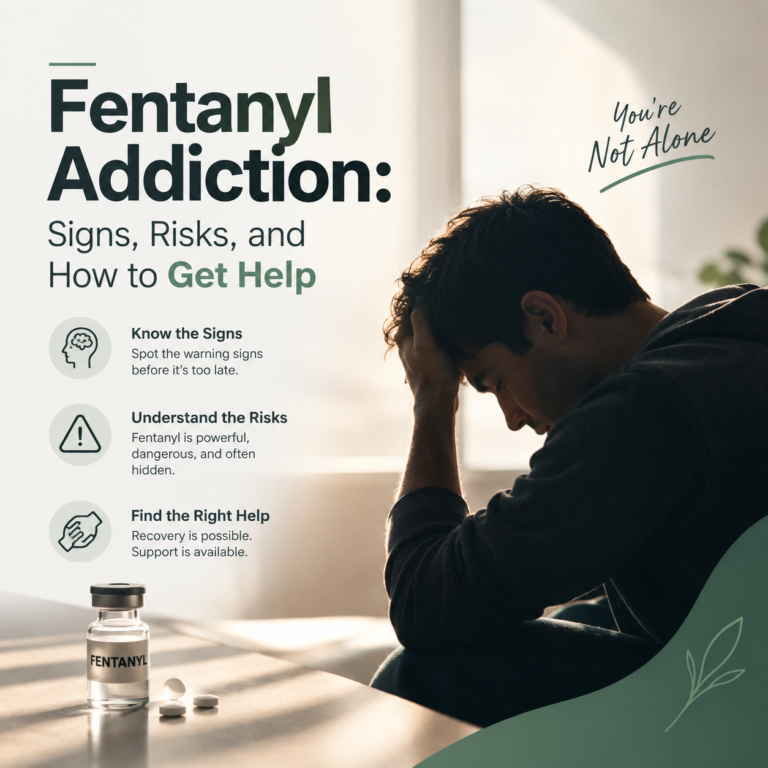

A bipolar and substance use disorder program is an integrated treatment program for people living with both bipolar disorder and substance use problems at the same time. If that sounds like your situation, you’re not dealing with something unusual or untreatable. In fact, research shows that people with bipolar disorder have a 56.1% lifetime rate of any substance use disorder, which is far higher than the general population, and that’s exactly why specialized programs exist.
Why bipolar and substance use often show up together
Bipolar disorder and substance use often travel together because each one can intensify the other. During mania or hypomania, a person may feel more impulsive, sleep less, take bigger risks, and use alcohol or drugs more freely. During depression, substances can start to look like fast relief, even when they make the crash worse later.
This overlap is common enough that it should be treated as expected, not surprising. A large review found that 60.7% of people with bipolar I disorder and 48.1% of people with bipolar II disorder have had a substance use disorder in their lifetime. Alcohol and cannabis are especially common. Across many studies, alcohol use disorder averaged 30% prevalence and cannabis use disorder 24% in bipolar disorder.
Good news: common does not mean hopeless.
It means programs need to be built for reality. And the reality is that trying to treat addiction while ignoring bipolar symptoms usually falls apart. If your mood swings, insomnia, agitation, depression, or mania are still active, they can drive cravings, impulsive decisions, isolation, and relapse. On the other side, ongoing substance use can trigger mood episodes, make medications harder to judge, and blur the picture for clinicians.
This is one reason integrated care matters so much. The National Institute of Mental Health explains that many people with substance use disorders also have bipolar disorder, and people with mental disorders are at higher risk of developing substance use problems. In real life, that means a one-track rehab plan usually isn’t enough.
What a bipolar and substance use disorder program actually is
A bipolar and substance use disorder program is a dual-diagnosis treatment program that addresses mood symptoms, substance use, and related mental health concerns in one coordinated plan. Instead of sending you to one provider for addiction, another for psychiatry, and maybe no one at all for trauma or anxiety, the treatment team works from the same map.
Think of it like repairing a house with an electrical problem and water damage at the same time. If one crew fixes only the wiring while another ignores the leak, the damage keeps spreading. Bipolar disorder and addiction work in a similar way. Separate care can miss how one condition keeps feeding the other.
Most strong programs also look beyond bipolar disorder alone. Anxiety, depression, trauma, PTSD, panic symptoms, and sleep disruption are often part of the picture. Research from the All of Us cohort found that 74.4% of people with a newly documented substance use disorder had at least one mental health comorbidity. So if you’re carrying more than one diagnosis, that is not a side issue. It should be part of the treatment plan from the start.
Why integrated treatment matters more than separate care
Integrated treatment matters because bipolar symptoms and substance use do not stay in their own lanes. Substance use can increase depression, agitation, and mania. Bipolar instability can raise the odds of binge use, self-medication, poor judgment, and medication nonadherence. Add sleep loss to the mix, and things can spiral fast.
A major review found that co-occurring bipolar disorder and substance use disorder is linked with more severe and longer-lasting mood symptoms, greater impulsivity, cognitive problems, and higher suicide risk than either disorder alone. That’s the clinical reason integrated treatment is not a bonus feature. It’s the safer model.
The evidence points the same way. A review of practice guidelines concluded that integrated treatment in the same setting is the optimal approach for co-occurring bipolar disorder and substance use disorder. Sequential treatment, where one condition gets addressed first and the other later, has the weakest support. That makes sense, honestly. If both fires are burning, you don’t put out one and hope the other waits.
If you want a broader picture of how this model works, it helps to read about care that treats mental health and addiction together in one plan. That coordinated approach is what gives people a better shot at lasting stability.
What happens during the first assessment
The first assessment is where the program figures out what’s happening medically, psychiatrically, and practically. It can feel like a lot, but it serves a purpose. The team is trying to answer a few urgent questions: What substances are involved? Are you at risk for dangerous withdrawal? Are you in a manic, depressive, mixed, or psychotic state? What treatments have helped before, and what made things worse?
Expect questions about your medical history, psychiatric history, substance use pattern, sleep, trauma exposure, current medications, family mental health history, and daily functioning. Many clinicians also screen for anxiety, PTSD, depression, and safety concerns because co-occurring symptoms are so common. In mental health care, clinicians often use the biopsychosocial model, which looks at biological, psychological, and social factors together. That approach fits dual-diagnosis care well because no one’s symptoms happen in a vacuum.
The team may also assess housing stability, legal stress, work problems, and support at home. That can seem unrelated at first, but it really isn’t. If you’re sleeping on a couch, living with active substance use, or going through a custody battle, treatment planning needs to reflect that.
Questions the team will likely ask
You’ll probably be asked what substances you use, how much, how often, and when you last used them. They may ask whether you drink daily, binge on weekends, use cannabis to sleep, take stimulants to function, or mix substances. They’ll also want to know about cravings, blackouts, overdose history, past detox, and what happens when you try to stop.
On the bipolar side, clinicians often ask when your mood shifts started, how long they last, whether you’ve had periods of very little sleep without feeling tired, racing thoughts, inflated confidence, irritability, impulsive spending, risky sex, agitation, deep depression, hopelessness, psychosis, or suicidal thinking. They may ask if others have told you that you seemed “sped up” or unlike yourself.
You may also hear questions about trauma, panic, obsessive thoughts, eating patterns, and previous treatment. What meds have you taken? Did lithium help? Did an antidepressant make you feel wired? Did therapy ever help you catch warning signs earlier? Programs with real dual-diagnosis experience gather these details because they shape the care plan. If you want a closer look at how structured support can begin during early recovery, what happens in emotional and psychiatric stabilization during rehab gives a useful preview.
Why honesty helps you get safer, more effective care
Honesty in intake is not about confessing. It’s about building a safer plan.
If you underreport alcohol, benzodiazepine, or opioid use, the team may miss withdrawal risk. If you leave out past mania, psychosis, or suicide attempts, they may underestimate how much monitoring you need. If you don’t mention that cannabis ramps up your paranoia or that you stop taking meds when you start feeling “better,” those patterns stay hidden when they should be front and center.
Accurate information also helps clinicians avoid common mistakes. The National Institute of Mental Health notes that accurate diagnosis is critical in co-occurring mental illness and substance use because symptoms can overlap, and providers need comprehensive assessment tools to reduce missed diagnoses. So honesty does more than help them understand you. It helps them not misread you.
How clinicians sort out bipolar symptoms from substance-related symptoms
One of the trickiest parts of treatment is figuring out what comes from bipolar disorder, what comes from substance use, and what comes from both. Intoxication can look like mania. Withdrawal can look like anxiety, agitation, insomnia, or depression. Severe sleep deprivation can make almost anyone appear emotionally unstable.
That’s why experienced clinicians do not rush this part. They look at timing, patterns, history, and what happens as your body clears substances and your sleep improves. For example, symptoms that only show up during stimulant use may point in one direction. Mood episodes that clearly happened during sober periods may point in another.
This can be frustrating if you want immediate answers. But careful observation is better than a fast, sloppy label.
Why diagnosis can take more than one appointment
Diagnosis can take time because early recovery is noisy. Brain chemistry is shifting, sleep may still be off, and emotions can swing hard in the first days or weeks. In that setting, a good team keeps assessing instead of pretending certainty.
That’s normal. It is not a sign that treatment is failing.
Clinicians often use formal screening tools, collateral history from past records or family when appropriate, and repeated psychiatric evaluation over time. The DSM-5-TR is still the industry standard for diagnosing mental disorders in the United States, but strong programs do not rely on a checklist alone. They watch how symptoms unfold in context.
Sometimes the diagnosis becomes clearer only after a period of sobriety or reduced use. Sometimes it confirms bipolar disorder. Sometimes it changes. Good care leaves room for that.
The main parts of treatment you’ll usually receive
Most bipolar and substance use disorder programs combine several kinds of care at once. That usually includes psychiatry, therapy, substance use counseling, relapse prevention work, health monitoring, and support for daily structure. Recovery tends to work better when the plan is layered, because no single intervention can carry all the weight.
This is where dual-diagnosis treatment often feels different from standard rehab. You are not just being told to stop using. You’re learning how to stay stable enough, emotionally and physically, to keep stopping.
Medication management for mood symptoms and substance use
Medication management is often a major part of care. For bipolar disorder, psychiatrists may consider mood stabilizers, antipsychotic medications, or other psychiatric medications based on your symptom pattern, side effects, past response, and current safety needs. If alcohol or opioid use disorder is part of the picture, the team may also consider medications that reduce cravings, block reward, or support safer recovery.
The key point is coordination. Med changes should account for both conditions, not just one. The National Institute of Mental Health states that medications can effectively treat opioid and alcohol addiction and can also lessen symptoms of many other mental disorders. In practice, that means medication planning should not treat addiction meds and bipolar meds as separate worlds.
Monitoring matters, too. Early side effects, activation, sedation, sleep changes, and adherence problems can show up quickly. A quality program adjusts rather than guessing. If you want to understand that part better, it helps to know what medication follow-up and psychiatric monitoring usually involve.
Therapy that builds coping skills and stability
Therapy in these programs is practical. Yes, insight matters, but day-to-day coping matters more. You may work on identifying mood triggers, handling cravings, tolerating distress, interrupting impulsive choices, and noticing the early signs of depression or mania before things fully tip.
Cognitive behavioral therapy, or CBT, helps you spot thought patterns and behaviors that keep cycles going. Dialectical behavior therapy, or DBT, teaches emotional regulation, distress tolerance, and interpersonal skills. Motivational interviewing can help if part of you wants to change and part of you still feels unsure. The National Institute of Mental Health highlights cognitive behavioral therapy, contingency management, and motivational interviewing as helpful approaches for co-occurring substance use and mental disorders.
For many people, trauma work also matters. Substance use can be tied to old survival strategies, not just bad habits. If trauma is part of your story, how trauma-focused care fits into addiction treatment can help explain why deeper emotional work often improves relapse outcomes.
Support for sleep, routine, and daily functioning
This part often gets underestimated, but it can make a huge difference. Bipolar disorder is highly sensitive to rhythm. Sleep disruption, skipped meals, isolation, overstimulation, and chaotic routines can all destabilize mood. The same instability can push substance use.
So programs often focus on basics: regular wake times, meals, hydration, movement, medication routines, and lower evening stimulation. It may sound simple. It is simple. But simple is not the same as easy.
Here’s the thing: structure protects the brain when motivation is low and judgment is shaky. In recovery, routine is not a punishment. It’s treatment.
What different program levels look like
Not everyone needs the same level of care. A bipolar and substance use disorder program may exist in several forms, depending on withdrawal risk, mood severity, suicidality, medical needs, and how safe your home environment is.
The right level of care is about fit, not toughness.
Detox and medical stabilization
Detox may come first if withdrawal could be dangerous or if you are medically unstable. This is especially true with alcohol, benzodiazepines, or heavy polysubstance use. In detox, the focus is safety, symptom management, hydration, sleep, medication support, and monitoring.
But detox is only the beginning. It clears the immediate emergency. It does not treat bipolar disorder, trauma, craving patterns, relationship chaos, or relapse triggers. That’s why discharge from detox should flow straight into ongoing treatment, not a vague plan to “figure it out later.”
Inpatient or residential treatment
Inpatient or residential care provides 24/7 structure and monitoring. Days usually include medication checks, individual therapy, group therapy, recovery education, routine-building, and regular observation by staff. This level of care can be especially helpful if you’ve had severe mood instability, recent suicidality, psychosis, repeated relapse, poor medication adherence, or an unsafe home setting.
For some people, residential treatment is the first place where symptoms finally become visible in a clear way, because substances, stress, and sleep chaos are not constantly scrambling the picture. That clarity can be a relief.
Outpatient and intensive outpatient care
Outpatient care works best when you are medically stable and have a reasonably safe place to live. Intensive outpatient programs usually involve several therapy sessions each week, psychiatric follow-up, substance use treatment, and accountability while you keep living at home. Standard outpatient care is less intensive and may focus on ongoing therapy, medication management, and relapse prevention.
This option can work very well, though the catch is that home life matters a lot. If your environment is full of conflict, easy access to substances, or no support at all, outpatient treatment becomes harder to sustain.
How programs handle safety, crises, and suicide risk
Safety planning is not a side topic in bipolar and substance use treatment. It is central. Bipolar disorder already carries a high risk of suicide, and adding substance use raises the stakes further by increasing impulsivity, hopelessness, disinhibition, and access to dangerous situations.
Michigan Medicine reports that nearly 40% of people with bipolar disorder attempt suicide over their lifetime, and death by suicide is close to 20%. The same source notes that about 1 in 5 people who died by suicide had opioids in their system, and a similar share had alcohol intoxication at death. Those numbers are sobering, and they explain why strong programs talk openly about crisis risk instead of avoiding it.
Being assessed for suicide risk does not mean you are “too severe” for treatment. It means the program is doing its job.
What a safety plan usually includes
A safety plan usually covers your personal warning signs, the thoughts and behaviors that show a crisis may be building, the coping steps you can try first, the people you can contact, and when to use urgent help. It should also include steps to reduce access to lethal means and clear instructions for what to do if you cannot stay safe.
Many programs now include practice using crisis resources before a real emergency happens. That can make a difference. Michigan Medicine reports that a one-session crisis line facilitation intervention, where people practice contacting 988 or another crisis resource, reduced suicidal behavior risk for a year afterward.
That is worth taking seriously. In a crisis, familiarity helps. You do not want your first time looking up support to be the worst moment of your life.
What treatment feels like week to week
Week to week, treatment usually has a rhythm. You might meet with a psychiatrist, attend individual therapy, go to group sessions, complete substance use counseling, and work with a case manager. Some programs include drug screening when relevant, not to shame you, but to guide treatment and track risk honestly.
There is also a lot of repetition, and that’s not a flaw. Recovery skills stick because you practice them repeatedly, not because you hear them once. You may track sleep, mood, cravings, medication effects, and triggers. You may role-play how to refuse substances, how to respond to family conflict, or how to act when early mania starts showing up.
Some people expect dramatic breakthroughs every week. Usually, it’s more grounded than that. A better sleep schedule. Fewer impulsive decisions. More awareness before a binge. Taking meds consistently. Asking for help one day earlier than you used to. That’s progress.
Progress is rarely perfectly linear
Progress in dual-diagnosis treatment is almost never a straight line. Medications may need adjusting. Sleep may improve before mood does. Cravings may spike when depression starts lifting. A relapse or return to use may happen, and even then, treatment can still be working if the person returns faster, uses less, or recognizes warning signs earlier.
Some programs are abstinence-based. Others include harm reduction, especially early on or when total abstinence is not yet realistic. Both models can have a place. The best fit depends on safety, substance type, readiness for change, and clinical judgment.
That flexibility matters because people are often more motivated than they appear. A recent study found that participants with bipolar disorder and a current substance use disorder had greater motivation to reduce substance use than those with past or no substance use disorder. So ambivalence is real, but it is not the same as not caring.
How family, partners, and support people may be involved
Loved ones can play a real role in recovery, especially when bipolar disorder and substance use have both strained trust. Programs may involve family or partners in education, communication planning, relapse prevention, and medication support, as long as it is safe and the patient agrees.
That involvement can help because family members often notice early warning signs before the person does. They may spot less sleep, pressured speech, disappearing money, rising irritability, secrecy, or skipped meds. When they know what those signs mean, they can respond earlier and with less panic.
Still, family involvement should be thoughtful. Not every family dynamic is healthy. In some cases, boundaries matter more than closeness. In others, privacy or trauma history means support needs to come from peers, friends, or professionals instead.
When family therapy or education can help
Family therapy or family education can reduce blame and confusion. It can teach loved ones the difference between support and rescuing, between accountability and control, and between a warning sign and a personal attack. The National Institute of Mental Health notes that family-based interventions can improve communication, family dynamics, and environmental factors that contribute to mental health and substance use problems.
That education can be especially useful when other symptoms are involved, too. Anxiety, trauma, and depression commonly overlap with bipolar disorder and substance use. If that’s part of your picture, understanding how anxiety treatment can be woven into addiction care can help families see why treatment often needs to address more than one diagnosis at once.
What to look for when choosing a program
Not every rehab or mental health clinic is equipped to treat bipolar disorder and substance use together. Some are strong in addiction treatment but weak in psychiatry. Others can prescribe medication but do not really treat active substance use. That gap matters, because split care is one reason people relapse.
A good program should be able to explain, clearly and confidently, how it handles both conditions together. If the answer sounds vague, that’s a warning sign.
Signs a program is equipped for dual diagnosis
Look for licensed mental health and addiction professionals on the same team. Look for psychiatric care on site, not just a referral list. Look for medication management, trauma-informed therapy, regular suicide-risk assessment, care coordination, and aftercare planning before discharge.
Programs should also be comfortable treating more than one mental health condition at once. That matters because co-occurring symptoms are normal in this population, not unusual. If a program only talks about addiction and seems uneasy about mania, depression, PTSD, or panic symptoms, it may not be the right fit.
NIMH describes integrated care as mental health and substance use treatment in one place that may include behavioral therapies, medications, and care management services. That is a useful baseline. If you want a fuller picture of quality markers, how to evaluate a center that treats both psychiatric symptoms and addiction is worth reviewing.
Questions to ask before you enroll
Ask whether the program treats bipolar disorder and substance use at the same time. Ask whether psychiatry is included on site and how often medication reviews happen. Ask whether they offer medications for alcohol or opioid use disorder when appropriate. Ask how they handle mania, suicidality, psychosis, trauma, and sleep disruption.
It also helps to ask what happens after discharge. Do they set up follow-up psychiatry? Is there a step-down level of care? How do they involve family, and how do they protect privacy? Do they support abstinence only, harm reduction, or both depending on the situation?
A good program should answer these questions plainly. No dodging, no salesy language, no pretending everyone gets the same plan.
What happens after the program ends
Treatment does not end because the calendar says discharge day. In many cases, the period after a higher level of care is when support matters most. You’re returning to real-life stress, less supervision, old triggers, and the daily effort of keeping routines in place.
Aftercare often includes step-down treatment, outpatient therapy, psychiatry visits, medication follow-up, peer support, relapse prevention work, and case management. Some people move from residential to intensive outpatient, then to standard outpatient. Others leave outpatient treatment but keep psychiatry and therapy in place for much longer.
That ongoing support is not a sign of weakness. It’s how recovery becomes durable.
How aftercare helps protect mood stability and sobriety
Aftercare helps by keeping structure around the exact areas that tend to drift first: sleep, medications, appointments, substance use monitoring, and response to early warning signs. It also creates a plan for what to do quickly if symptoms start returning.
That speed matters. When people catch changes early, they often avoid a full episode or major relapse. A few bad nights of sleep, a return of racing thoughts, growing irritability, or more frequent drinking can all be addressed sooner instead of later.
SAMHSA says effective substance use treatment can include medications, counseling, and recovery supports, and there is no one-size-fits-all solution. Aftercare is where that principle really shows up. The plan should fit your risks, your strengths, and the life you’re actually going back to.
Common fears and misconceptions about dual-diagnosis treatment
A lot of people delay care because they think they are too complicated, too unstable, or too far behind. That thinking is common, but it is also one of the biggest barriers to getting better.
The truth is simpler: dual-diagnosis programs are built for complexity. That is their job.
“Do I have to be fully sober before I can get help?”
No. Many programs will assess and treat you even if you are actively using, though detox or medical stabilization may need to happen first. If withdrawal is risky, safety comes before everything else. If it isn’t, the team may begin treatment while working with your current stage of change.
Some programs are abstinence-based. Others use harm reduction. Both can be clinically appropriate depending on the substance, your safety, and your readiness. What matters most is that care starts, not that you somehow fix everything alone before showing up.
“What if I also have anxiety, PTSD, or depression?”
That is common, and it should be part of the treatment plan from the beginning. Co-occurring mental health symptoms are the rule more often than the exception. In the All of Us cohort, anxiety was the most common mental health comorbidity at 25.3%, followed closely by depression at 23.1% among people with newly documented substance use disorders.
In other words, added diagnoses do not disqualify you from treatment. They help define what kind of treatment you need.
“What if I’ve tried treatment before and relapsed?”
Relapse is painful, but it is not proof that treatment cannot work. More often, it means something in the plan was missing, the level of care was wrong, bipolar symptoms were under-treated, trauma stayed unaddressed, or supports dropped too fast afterward.
Previous treatment still gives useful information. It shows what medications you tolerated, what settings helped, what triggers showed up, and where the gaps were. That knowledge can make the next treatment plan sharper and more realistic.
And honestly, many people do not enter care early. NAMI reports that the average delay between the onset of mental illness symptoms and treatment is 11 years. So if you feel late to this process, you are far from alone.
A simple next step if you think you need this kind of program
If you think you may need a bipolar and substance use disorder program, the next step does not have to be dramatic. Start with one assessment, one phone call, or one honest conversation with a trusted clinician. The goal is not to solve everything today. It is to get an accurate picture and move toward care that treats the whole problem, not just the loudest part of it.
Integrated treatment works better because it matches how these conditions actually show up in real life. When bipolar symptoms, substance use, safety concerns, and other mental health issues are treated together, recovery has a much stronger foundation. That first step may feel heavy, but it is still just one step, and it can lead somewhere much steadier.