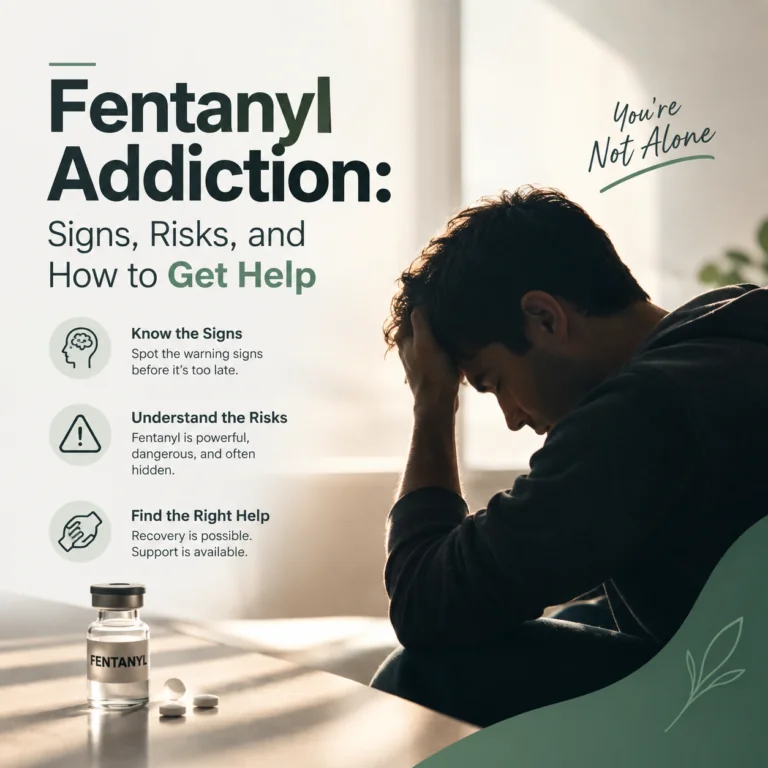

Fentanyl detox with medication management is a medically supervised way to help your body clear fentanyl while treating withdrawal in real time. That matters because fentanyl withdrawal is often more intense, less predictable, and harder to manage than many families expect, especially now that the street supply is so mixed. The good news is that careful detox can make the first step into recovery safer, more comfortable, and much more likely to lead to ongoing treatment.
What fentanyl detox with medication management means
At its simplest, fentanyl detox with medication management means you are not left to suffer through withdrawal on your own. A medical team monitors your symptoms, checks your vital signs, and uses targeted medications to reduce distress, lower risk, and help you stabilize.
Detox is the short phase. It is about getting through the acute withdrawal period safely. Medication management is the active part of that process, where clinicians decide what to give, when to give it, and how to adjust it based on how your body is responding.
That distinction matters. Detox is not the same as full addiction treatment. It is the bridge into treatment.
For many people, that bridge is what makes recovery feel possible. If withdrawal is miserable, chaotic, or under-treated, people often leave care early. When symptoms are managed well, you can sleep, hydrate, think more clearly, and say yes to the next step, whether that is residential treatment, outpatient care, or ongoing medication for opioid use disorder. If you want a broader picture of how supervised withdrawal care works, it helps to understand what medical detox actually involves.
Why fentanyl withdrawal is different now
Fentanyl changed the detox picture. It is not just another opioid. The American Psychiatric Association notes that fentanyl is 50 times more potent than heroin and 100 times more potent than morphine, which helps explain why dependence, overdose risk, and withdrawal can hit so hard.
It is also now tied to most opioid overdose deaths. APA reports that nearly 74,000 opioid overdose deaths were linked to synthetic opioid fentanyl in the data it cites. So when people seek opioid detox today, fentanyl is usually part of the clinical picture, whether they realize it or not.
Here’s the key idea: older assumptions about opioid withdrawal often do not hold up well in the fentanyl era.
The drug supply is more unpredictable than many people realize
Many people think they know what they have been using. Often, they do not. Fentanyl is commonly mixed into other drugs, and now clinicians also have to think about sedating additives like xylazine and medetomidine.
That is not a niche issue anymore. CDC reports that from July 2025 to December 2025, medetomidine was found in almost 35% of opioid-positive samples at 10 of 20 sentinel sites, and 98% of medetomidine-positive drug product samples also contained fentanyl. In plain terms, contaminated supply is common enough that detox teams have to plan for it.
Why does that matter during detox? Because mixed drug exposure can change sedation, blood pressure, heart rate, withdrawal timing, and even how a person responds during overdose. CDC also warns that prolonged sedation that does not improve after adequate naloxone should raise concern for medetomidine toxicity. Naloxone still matters because fentanyl is often involved, but it does not reverse everything in the supply.
Local trends matter too. A center that tracks real-world supply patterns is better positioned to recognize why one patient looks like classic opioid withdrawal while another has unusual agitation, prolonged sedation, or both.
Older withdrawal playbooks do not always work well
Standard opioid detox protocols were built around heroin and short-acting prescription opioids. Fentanyl does not always behave the same way. It can linger in the body longer than expected, and that can complicate the timing of medications, especially buprenorphine.
A 2026 clinician survey from Penn State and the University of Pittsburgh found that 72% of 396 health care providers said they had trouble starting buprenorphine treatment for patients using fentanyl. Even more concerning, nearly 62% reported severe, sudden-onset withdrawal during initiation, and 52.8% reported prolonged withdrawal lasting days instead of hours.
That is why many clinicians now adapt their approach instead of following a rigid script. In the same survey, about 67% said they modified standard buprenorphine protocols for fentanyl-exposed patients. Good news, this is exactly what skilled detox teams are supposed to do. They assess, adjust, and individualize.
Why medication management matters during detox
Medication management is not just about making detox feel easier. It can determine whether someone stays in care long enough to begin real treatment.
Withdrawal from opioids can be brutal. The APA describes symptoms such as whole-body pain, chills, cramps, diarrhea, anxiety, nausea, vomiting, insomnia, and intense cravings. While opioid withdrawal is usually not medically lethal in the way alcohol or benzodiazepine withdrawal can be, severe distress pushes many people back to use simply to make the symptoms stop.
And after even a short period of abstinence, tolerance drops. That raises overdose risk if a person returns to the same amount they were using before detox.
Keeping you in care can save your life
This is one of the biggest practical reasons medication-managed detox matters. If symptoms are treated early and well, people are more likely to remain in treatment instead of leaving against medical advice or returning immediately to fentanyl use.
A real-world emergency department study offers a useful example. In a cohort of fentanyl and xylazine withdrawal cases, the medication protocol reduced median COWS scores from 12 before treatment to 4 after treatment. Just as important, the patient-directed discharge rate was 3.9% compared with a baseline rate of 10.7%.
That gap matters. Leaving early often means losing momentum, missing the handoff to treatment, and going back into the same overdose risk environment that brought someone to detox in the first place. For people using more than one substance, this becomes even more complicated, which is why care built for mixed-drug withdrawal can be so valuable.
Comfort and safety usually improve together
People sometimes hear “comfort care” and assume it means soft or optional treatment. It is not. When pain, nausea, diarrhea, sweating, agitation, and insomnia are controlled, patients rest more, drink fluids, tolerate food, and think more clearly. That improves safety.
It also improves decision-making. Someone who has slept two hours in three days and cannot keep water down is much less likely to absorb discharge instructions or agree to follow-up care. Someone whose symptoms are being actively treated is more likely to stay engaged.
Honestly, this is where detox should feel different from trying to quit alone. You should not have to white-knuckle every minute.
What symptoms and timelines often look like
Fentanyl withdrawal often looks like opioid withdrawal, but with more variability. The overall pattern is familiar. The timing is not always.
Many patients still begin feeling symptoms within the first day after last use, but fentanyl can blur the usual schedule. Withdrawal symptoms after opioid tapering often begin 12 to 48 hours after the last dose, are worst during the 24- to 96-hour window, and generally improve within 5 to 7 days. With heavy fentanyl use, though, symptoms may last longer, rebound, or shift depending on other substances involved.
Common symptoms clinicians watch for
Clinicians watch for muscle aches, nausea, vomiting, diarrhea, sweating, goosebumps, yawning, anxiety, restlessness, insomnia, fast heart rate, high blood pressure, and cravings. They also track hydration, sleep, orientation, and how rapidly symptoms are changing.
The tricky part is sorting out what is actually causing what. Is someone restless because they are in opioid withdrawal? Are they overly sedated because of a contaminant like medetomidine? Is there alcohol or benzodiazepine withdrawal happening too?
That is why careful observation matters. In the fentanyl/xylazine emergency department study, 100% of urine toxicology screens were positive for fentanyl, but the treatment still had to address a broader cluster of symptoms than opioid withdrawal alone. If another substance is also involved, similar principles apply to opioid withdrawal care with around-the-clock monitoring, where staff can respond quickly as symptoms change.
A general timeline, with room for variation
A general timeline still helps. Early symptoms often include anxiety, yawning, sweating, body aches, and cravings. The peak phase often brings worse stomach symptoms, insomnia, chills, restlessness, and stronger pain. After that, symptoms usually taper, but sleep trouble, fatigue, and cravings can linger.
The catch is that fentanyl may stretch this out. Some people report feeling worse for days, not just hours, especially after heavy use or repeated use of fentanyl mixed with sedatives. Penn State researchers noted that fentanyl’s chemistry may allow it to linger in fat tissue, which may help explain why withdrawal and buprenorphine transitions can be prolonged.
So yes, there is a timeline. But a rigid timeline is not the same thing as a safe plan.
Which medications may be used, and how they help
Medication-managed fentanyl detox is usually layered. One medication may address opioid withdrawal itself, while others target nausea, sleep, muscle pain, blood pressure, sweating, or agitation.
That approach makes sense because fentanyl-era withdrawal is often not one symptom at a time. It can feel like your nervous system, stomach, muscles, and sleep cycle are all rebelling together.
Buprenorphine and methadone are often the core medications
Buprenorphine and methadone are the main evidence-based medications used to treat opioid withdrawal and opioid use disorder. The APA explains that methadone fully activates opioid receptors and reduces withdrawal symptoms and cravings, while buprenorphine partially activates receptors and can eliminate withdrawal symptoms and cravings.
These medications do more than “take the edge off.” They stabilize the opioid receptors in the brain so the body is not swinging between intoxication and withdrawal. That is a big reason medications for opioid use disorder can reduce illicit opioid use by up to 90%.
Buprenorphine remains life-saving, but starting it after fentanyl can be tricky. If timing is off, symptoms can worsen fast. Methadone may be the better fit when buprenorphine induction is difficult, especially in a closely supervised setting. This is one reason many families compare programs that offer medication-supported opioid withdrawal care instead of detox centers that rely on minimal symptom relief.
Supportive medications can target specific symptoms
Supportive medications are the practical side of detox. They may be used for nausea, diarrhea, muscle pain, insomnia, anxiety, elevated heart rate, sweating, or blood pressure changes. In cases involving medetomidine, CDC notes that withdrawal management may include opioid withdrawal treatment plus alpha-2 agonist therapy with clonidine and dexmedetomidine if needed, along with treatment for agitation and hypertension.
That is what multimodal care means. Clinicians do not wait for one symptom to become unbearable before treating it. They manage several at once, because that is usually how withdrawal arrives.
Newer strategies are changing fentanyl detox
This is where things are moving fast. Modified buprenorphine starts, sometimes called low-dose or micro-induction approaches, are increasingly used when standard induction feels too risky.
There is also promising early evidence for ketamine-assisted buprenorphine transitions. A University of Washington-led study found that an extremely low intramuscular dose of ketamine given before buprenorphine rapidly and substantially reduced fentanyl withdrawal symptoms. In that study, more than half of 50 patients became completely free of withdrawal symptoms within one hour, and average length of stay dropped from 66 hours to 7 hours.
Those results are encouraging, though the evidence is still evolving and comes from a small cohort. Even so, it shows the bigger point clearly: fentanyl detox now often requires updated strategies, not outdated assumptions.
How clinicians decide on the right detox plan
A good detox plan is built, not guessed. Clinicians look at how much fentanyl you have been using, how often you use it, when you last used, what else may be in the drug supply, and whether alcohol, benzodiazepines, stimulants, or other drugs are also involved.
They also consider pregnancy, chronic pain, dehydration, infection risk, mental health symptoms, sleep deprivation, overdose history, and your treatment goals after detox. Families sometimes want a simple answer, but the safest answer is usually a personalized one.
Tools like COWS help guide treatment, but they are not the whole story
The Clinical Opiate Withdrawal Scale, or COWS, is a symptom score clinicians use to track opioid withdrawal. It looks at things like sweating, restlessness, pupil size, stomach upset, tremor, yawning, anxiety, goosebumps, and pulse. The score helps staff judge severity and decide when certain medications are more appropriate.
That said, fentanyl-era care cannot rely on a score alone. Symptoms can overlap with sedation from other contaminants, or with alcohol and benzodiazepine withdrawal. Clinical judgment still matters.
And sometimes bedside clues are simple. CDC advises that bradycardia can suggest medetomidine toxicity, while tachycardia and hypertension can suggest medetomidine withdrawal. Those details can change the treatment plan fast.
Co-occurring substances can change the plan fast
If alcohol or benzodiazepines are part of the picture, detox risk rises because those withdrawals can be medically dangerous. If xylazine or medetomidine may be involved, patients may need more monitoring for sedation, blood pressure shifts, autonomic symptoms, or unusual agitation.
CDC has already documented how serious this can become. In Philadelphia, 165 patients were hospitalized from September 2024 to January 2025 for fentanyl withdrawal complicated by severe autonomic dysfunction, and many required high-acuity care. Good news, careful assessment can catch these patterns early.
This is also why detox centers should be prepared to involve toxicology or poison control when symptoms do not fit a standard opioid withdrawal picture. And when alcohol or benzos are involved too, families should expect the same level of caution used in programs built for alcohol withdrawal with medical oversight.
What medically supervised fentanyl detox looks like day to day
A lot of fear comes from not knowing what happens once you arrive. In a well-run detox setting, the process is structured, calm, and highly monitored. You are assessed, treated, reassessed, and kept moving toward stabilization.
The goal is not perfection in the first hour. It is steady relief and safe progress.
The first hours focus on safety, relief, and a clear assessment
The first phase usually includes check-in, medical history, substance-use review, vital signs, symptom scoring, and questions about other drugs, medications, and overdose history. Staff will also look at hydration, sleep, mental status, and any immediate safety concerns.
Then the treatment plan begins. Sometimes medication starts right away. Sometimes a clinician watches a bit longer before giving a core medication like buprenorphine if timing could affect withdrawal risk. That waiting, when it happens, is not neglect. It is strategy.
The goal is stabilization, not white-knuckling
As detox continues, staff check symptoms regularly and adjust medications based on what is actually happening, not what should be happening on paper. They support sleep, hydration, nutrition, and rest. If withdrawal intensifies, they respond.
That matters because fentanyl withdrawal can turn quickly. A center prepared for this will not tell you to simply tough it out. It will use physician oversight, nursing observation, and symptom-specific medication adjustments to help you stabilize enough for the next phase of care.
Detox is the first step, not the finish line
Detox helps you stop using safely. Treatment helps you stay stopped.
That difference is one of the most important things families can understand. A person can complete detox and still be at very high risk for relapse if there is no follow-up plan. In fact, risk may rise after detox because tolerance has dropped while cravings and stress may still be strong.
The better path is seamless continuation of care. That often means ongoing buprenorphine or methadone, residential treatment, outpatient therapy, case management, relapse prevention planning, and family support. Detox opens the door. It does not replace what comes after.
What should happen right after detox
The handoff should be warm, specific, and scheduled. Not vague. Ideally, the next appointment is already arranged before discharge. If residential care is the right fit, the transfer should be direct. If outpatient treatment makes sense, there should be a clear medication plan, follow-up date, and naloxone on hand.
People do better when there are fewer gaps. Even a delay of a few days can be enough to lose momentum.
Questions families often ask before choosing care
Families usually want plain answers. That makes sense, especially when the situation feels urgent.
Can fentanyl withdrawal be dangerous?
Yes, it can be serious. Opioid withdrawal itself is usually not as medically lethal as alcohol or benzodiazepine withdrawal, but it can still lead to dehydration, severe distress, poor decision-making, and rapid return to use. If the drug supply also contains sedatives or if other substances are involved, risk goes up.
Can you detox at home?
Home detox is risky with fentanyl. The supply is too unpredictable, symptoms can shift quickly, and contaminants can change the picture in ways families cannot safely manage on their own. Medical supervision offers faster symptom relief, monitoring, and a direct path into treatment.
How do you know if a center is prepared for fentanyl-era detox?
Look for 24/7 medical supervision, physician oversight, experience with both buprenorphine and methadone, symptom-specific medications, overdose response readiness, and a clear plan for what comes after detox. A center should also be comfortable managing polysubstance use and adjusting care when fentanyl does not behave like older opioid cases.
The next step if you need help now
Fentanyl detox with medication management is not about suffering less for a few days and hoping for the best. It is about getting through withdrawal safely, staying in care, and stepping into treatment with your body and mind stable enough to keep going.
If fentanyl use is involved, fast assessment matters. The right medical team can reduce risk, ease symptoms, and make the first step feel much more manageable. That first call, first evaluation, or first admission can be the moment things start to turn.