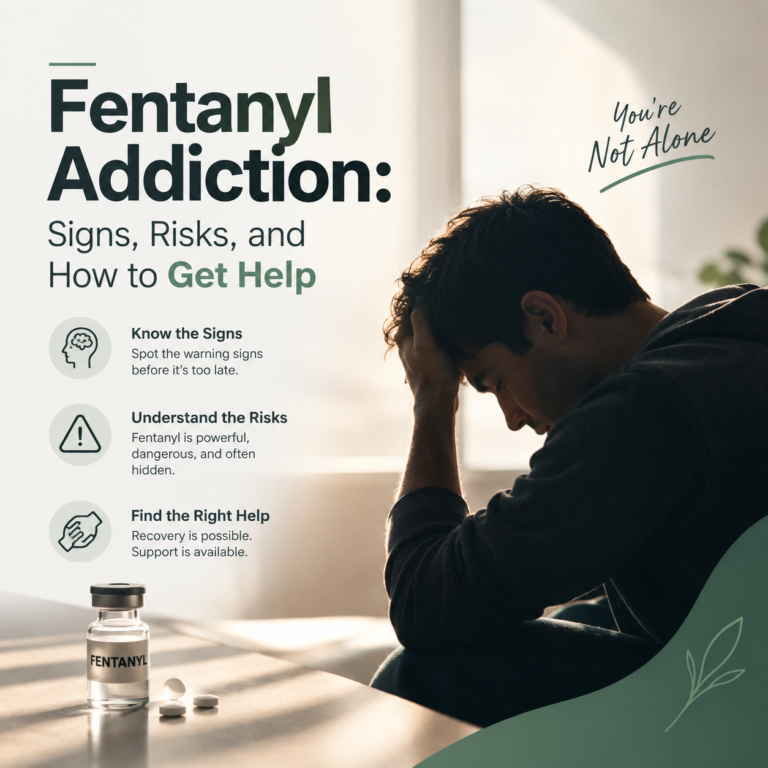

Intensive outpatient addiction services are structured treatment programs that let you live at home while receiving several hours of therapy and recovery support each week. If you’re stepping down from detox or residential care, this level of care often matters more than people realize, because the move back into daily life is exactly when structure, accountability, and therapy continuity help protect the progress you’ve already made. The need is real: approximately 80,391 U.S. adults died from drug overdoses in 2024.
What intensive outpatient addiction services are, and where they fit in recovery
Intensive outpatient addiction services, often called IOP, are non-residential treatment for substance use disorders. In plain English, that means you attend treatment several days a week, but you do not sleep at the facility. You keep living at home, or in sober housing, while continuing therapy, relapse prevention work, and clinical support.
That middle-ground role is what makes IOP so useful. Recovery usually is not a single event. It is a continuum. You may start with detox if withdrawal is a risk, move into residential treatment if you need 24-hour support, then step down into a lower level of care as you stabilize. Industry guidance notes that ASAM levels of care provide the framework for designing substance use disorder services, with treatment delivered on an outpatient, residential, or inpatient basis depending on acuity. IOP sits in that step-down lane.
For many people, this is the point where treatment starts to feel more like real life. You are no longer practicing coping skills in a controlled bubble only. You are using them while handling work, family tension, cravings, transportation, and ordinary stress. That is exactly why step-down care matters.
The one-sentence takeaway
IOP gives you more accountability and structure than standard outpatient care, without the full-time stay of inpatient or residential treatment.
If you are returning to work, school, parenting, or daily responsibilities, that balance can be the difference between feeling supported and feeling suddenly on your own.
Why many people choose IOP after detox or residential treatment
The stretch after detox or residential care can feel oddly vulnerable. You may be physically safer and mentally clearer, but you are also heading back into the environments, relationships, and routines tied to your substance use. That is where IOP earns its value. It helps bridge the gap between high supervision and full independence.
A good step-down plan is not about keeping you in treatment longer for the sake of it. It is about keeping your momentum. Residential care can interrupt harmful patterns. IOP helps you replace them with repeatable routines in the real world. You still have therapy. You still have check-ins. You still have relapse prevention. But now you are applying those tools while living your actual life.
That balance is one reason outpatient treatment continues to grow. Research suggests outpatient programs are significantly more affordable than inpatient or residential care, and insurance companies increasingly favor outpatient models because they lower overall treatment costs. Cost is not the only factor, but it does affect whether people can stay engaged.
The catch is that IOP works best when your home life is reasonably stable. If your living situation is chaotic, unsafe, or full of active substance use, more support may be needed first.
What “structured support without living onsite” really means
Day to day, structured support usually means you have a set weekly schedule. You attend therapy groups, meet with an individual counselor, work on coping skills, review relapse triggers, and stay connected to a clinical team that notices when you are struggling. Some programs include family sessions, medication support, recovery education, peer support, and case management.
That may sound intense, but honestly, it often feels manageable once the schedule is in place. Instead of being left to “just do better,” you have a rhythm. Show up. Check in. Practice skills. Talk about what is working and what is not. Then come back and do it again. Recovery gets steadier when it becomes a routine, not just a promise.
What an intensive outpatient program usually includes each week
Most intensive outpatient programs include about 9 to 12 hours of treatment per week. A clinical overview describes IOP as structured, non-residential addiction treatment that typically provides 9 to 12 hours of therapy weekly through group counseling, individual counseling, family therapy, and educational sessions. That is a useful benchmark, though actual schedules vary by provider and by what you need clinically.
In practice, that weekly care is designed to do two things at once. It keeps enough intensity to support early recovery, and it leaves enough flexibility for normal life responsibilities. Good news, this is often easier to fit around daily life than people expect. Many programs offer morning, afternoon, or evening tracks.
You may also see treatment planning, relapse prevention education, skill practice, urine drug screening if clinically appropriate, psychiatric visits, and case management. If you want a fuller picture of how this level of treatment is structured in everyday practice, it helps to think of IOP as a schedule with purpose, not just a set of appointments.
Group therapy, individual counseling, and family support
Group therapy is usually the backbone of IOP. That is not because individual counseling matters less. It is because group work gives you repetition, accountability, perspective, and connection. You hear how other people handle cravings, setbacks, shame, conflict, and boredom. You also stop feeling like the only one trying to rebuild a life.
Individual counseling does a different job. It focuses on your triggers, your history, your relapse patterns, and your goals. A group can teach the skill. Individual therapy helps tailor it to your actual life.
Family support matters too, especially after residential care. Home is where recovery often succeeds or unravels. Family sessions can improve communication, set boundaries, reduce enabling, and help loved ones support recovery without taking over. For many people, bringing loved ones into the process in a healthy, structured way strengthens treatment instead of complicating it.
Medication, mental health care, and whole-person services
Some people in IOP benefit from medication-assisted treatment, especially for opioid or alcohol use disorders. Medication is not a shortcut, and it is not separate from recovery. It works best when paired with therapy, relapse prevention, and regular follow-up.
Mental health care matters just as much. Many people entering addiction treatment are also dealing with depression, anxiety, trauma, or PTSD. A provider resource notes that treating co-occurring mental health conditions such as anxiety, depression, and PTSD at the same time as addiction is the clinical standard of care in outpatient addiction treatment. That makes sense. If panic, trauma symptoms, or depression keep driving your substance use, treating addiction alone leaves a major piece untouched.
Whole-person services round this out. Housing support, employment help, peer support, transportation planning, and legal coordination may sound secondary, but they are not. In one study of outpatient populations, 29 percent had unmet service needs, especially around employment, housing, and emotional support. Recovery is harder when the rest of life is falling apart.
Who is a good fit for intensive outpatient addiction services, and who may need more care
IOP is often a good fit for people who are medically stable, do not need detox, and do not require 24-hour supervision. It can work well if you can attend treatment consistently, have a reasonably safe place to live, and are ready to practice recovery skills outside a facility.
That does not mean you need perfect motivation or a perfect home. Almost nobody has that. It means the structure of IOP is enough to keep you safe and engaged while you rebuild routine.
Signs IOP may be the right next step
IOP often makes sense if you have finished detox or residential treatment and do not want to lose momentum. It can also fit if you want ongoing accountability, need a schedule that works around employment or caregiving, have moderate symptom severity, and are willing to keep showing up even when life gets busy.
It is especially useful if your biggest challenge is transition. Not crisis, but the stretch where you are stable enough to leave higher-level care and not yet steady enough to go without frequent support. If that sounds familiar, seeing how recovery-focused IOP works in real life can make the next step feel less abstract.
When PHP, residential care, or detox may be safer
Sometimes IOP is not enough, at least not yet. If you have a serious withdrawal risk, unstable housing, repeated relapse with major safety concerns, active medical complications, or severe psychiatric symptoms, a higher level of care may be safer. The same is true if you cannot reliably stay substance-free between sessions, or if your environment makes ongoing use highly likely.
This is where level-of-care thinking helps. Not as jargon, but as matching support to need. Partial hospitalization programs usually involve more hours and closer monitoring than IOP. Residential treatment adds onsite living and round-the-clock structure. Detox addresses the medical risks of withdrawal. If you need a clearer picture of that middle-higher option, this guide to what day treatment involves and when it fits can help put PHP in context.
How IOP compares with standard outpatient, PHP, and residential treatment
People often hear these terms and assume they mean roughly the same thing. They do not. The differences matter because the right level of care can support recovery, while the wrong one can leave you under-supported or overwhelmed.
Here is the simple version: standard outpatient is lighter, IOP is moderate and structured, PHP is more intensive, and residential treatment includes living onsite. None of these is “better” in the abstract. Better means matched to your current needs.
IOP vs. standard outpatient care
Standard outpatient care usually involves fewer sessions per week and less clinical structure. You might see a therapist once a week, attend occasional groups, or check in for medication management. That can work well later in recovery, when your routines are stronger and relapse risk is lower.
IOP adds more frequent contact and stronger accountability. Early in recovery, that difference matters. If cravings are still active, triggers are fresh, and daily life feels shaky, one weekly session may not be enough to keep you grounded. More touchpoints often mean quicker course correction.
IOP vs. PHP and residential treatment
PHP, or partial hospitalization, usually includes more treatment hours each week than IOP and closer clinical monitoring. It is often used when someone needs near-daily treatment but does not need overnight care. Residential treatment is more intensive still, because you live onsite and receive round-the-clock support.
IOP is the middle ground. Not a lesser option, just a different one. It works well when you no longer need full-day or live-in care, but still need real structure. That distinction matters, especially for people with co-occurring mental health needs. If both substance use and psychiatric symptoms are still highly active, programs that treat both conditions with more intensity may be the safer bridge before stepping down to IOP.
What to expect in your first few weeks of an IOP
The first few weeks usually begin with an assessment. A clinician reviews your substance use history, withdrawal risk, mental health symptoms, medical needs, medications, safety concerns, and recovery goals. From there, the program builds a treatment plan and weekly schedule.
You will probably attend orientation or intake sessions, start group therapy quickly, and meet your individual counselor early on. Some programs include drug testing as one accountability tool, though it should support treatment rather than feel punitive. Good programs explain what they track and why.
This phase can feel awkward at first. That is normal. You are learning new routines while also reentering ordinary life. But structure helps. Instead of guessing what recovery should look like on Tuesday at 6 p.m., you know where you are supposed to be and what the next step is.
A sample schedule, from intake to weekly routine
A typical week might include three evening group sessions, one individual therapy session, and one medication or psychiatry check-in if needed. If you work during the day, evening programming can make treatment possible without pausing your income. If you are home with children, a morning track may fit better.
Between sessions, you may have recovery homework, journaling, coping-skill practice, peer meetings, or family assignments. Some programs encourage outside support groups as well. The goal is not to keep you busy for the sake of it. The goal is to help recovery show up between appointments, where it actually has to work.
How progress is measured
Good programs do not measure progress by attendance alone. They also look at cravings, substance use, mood symptoms, coping skills, participation, treatment goals, and your ability to handle daily responsibilities more safely. Progress reviews should happen regularly, not just at discharge.
That matters because care should adjust as you change. A one-size-fits-all plan is rarely enough. If you are doing well, treatment may taper. If your symptoms rise, support may increase. Strong step-down care is supposed to be responsive.
What the evidence says about outcomes
The research base on IOP is strong enough to say something useful without overpromising. Intensive outpatient care is an evidence-supported option for many people with substance use disorders, especially when it uses established therapies and matches the right level of need.
One study from Emory Healthcare’s Veterans Program found that a 2-week intensive outpatient program integrating CBT for substance use disorder and co-occurring disorders was feasible for post-9/11 veterans and active duty service members. More importantly, in that same study, 42 patients who completed the track showed significant decreases in self-reported substance use, PTSD symptoms, and depression symptoms. That is encouraging, especially because the program was short and highly focused.
Some provider-level data also suggest IOP can produce meaningful recovery outcomes over time. One summary reports abstinence rates of 50 percent to 60 percent at six months after treatment, describing results comparable to inpatient care for appropriate candidates. No single number tells the whole story, but the broader point stands: IOP is not a fallback. It is a real treatment model.
Why integrated mental health treatment improves results
Integrated treatment improves outcomes because addiction rarely travels alone. Depression can drain motivation. Anxiety can make cravings feel unbearable. Trauma can keep the nervous system stuck in survival mode. If these conditions are untreated, relapse prevention becomes much harder.
The Emory study is useful here too. Researchers reported that the integrated IOP increased satisfaction with participation in social roles, which suggests improvement beyond symptom reduction alone. They also found that benefits may be consistent across in-person, hybrid, and telehealth delivery formats. In other words, integrated care can work across different formats when the clinical model is solid.
Cost, insurance, and the real question of affordability
IOP is usually more affordable than residential treatment, but “more affordable” does not always mean cheap. Costs vary a lot by setting, insurance coverage, location, and what the program includes. Hospital-based services, psychiatry visits, medication management, and drug screening can all affect the final bill.
Still, outpatient treatment tends to be the more accessible option financially. Market analysis projects that the outpatient treatment segment will hold the largest share of the substance abuse treatment market, largely because of cost-effectiveness and insurance coverage. That lines up with what patients see in real life.
Typical costs and why the numbers vary so much
Older national cost estimates put IOP at an average episode cost of $3,582, or $4,939 when adjusted for inflation. Another estimate reported a range of $1,384 to $5,780 per episode, or roughly $1,908 to $7,969 adjusted for inflation. Those numbers reflect broad averages, not what every center charges today.
Private-pay pricing can be much higher. One cost summary reported private intensive outpatient alcohol treatment at $500 to $650 per day, with 30-day totals reaching far beyond what many families can comfortably pay. Program length matters too. Some IOPs run 8 to 12 weeks, and more services usually mean higher costs. That is why comparing programs based on sticker price alone can be misleading.
What insurance may cover, including and employer plans
Many commercial plans and programs cover IOP when it is medically necessary. But coverage details matter. Prior authorization, in-network rules, deductibles, visit limits, and pharmacy benefits can all affect access. Telehealth coverage matters too, especially if transportation or work schedules are barriers.
There is also policy uncertainty. Industry reporting warns that redeterminations have already disenrolled about 17 million people through August 2025, and that possible federal changes could shrink enrollment further. For patients, that means it is wise to verify benefits before enrolling, not after.
Ask practical questions. What is the copay per session? Does the deductible apply? Are drug screens billed separately? Is medication management covered? Are virtual sessions reimbursed the same way? A five-minute insurance check can prevent an ugly surprise.
How telehealth and hybrid IOPs are changing access
Telehealth and hybrid models are changing who can realistically attend treatment. If you live far from a clinic, work an inflexible job, care for children, or lack reliable transportation, virtual access can make the difference between getting help and dropping out.
That shift is not fringe anymore. Research notes that telemedicine is now used by more than half of U.S. rehab centers, and policy changes continue to support remote behavioral health delivery. Industry analysis says telehealth prescribing flexibility and expanded Medicare reimbursement for behavioral health should improve access, especially in rural areas. That is a practical gain, not just a tech trend.
When virtual care works well, and when in-person care may be better
Virtual IOP can work well when you have a stable place to log in, enough privacy to participate honestly, and the self-direction to stay engaged. It can be especially helpful during transitions, because treatment remains accessible even when your schedule changes. That continuity matters after discharge from higher levels of care.
Still, in-person care is sometimes better. Some people focus more effectively in a room with others. Some need stronger separation from home stress. Others lack privacy, stable internet, or a safe environment for remote therapy. Hybrid care often lands in the sweet spot, giving you flexibility without losing face-to-face structure. The best format is the one that supports attendance, honesty, and follow-through.
How to choose a program that will actually support your recovery
Not every IOP is built the same. A nearby program is not automatically the right program. You want a setting that treats addiction as a long-term recovery process, not a short episode to get through.
Look for continuity. If you are stepping down from detox, residential, or PHP, the next level of care should feel connected, not like starting over with strangers who do not know your history. Good programs preserve momentum. They coordinate care, keep expectations clear, and help you build a routine you can continue after discharge.
Questions to ask before you enroll
Ask whether the program treats co-occurring mental health conditions, offers medication-assisted treatment, and has a schedule that fits your life. Ask if family therapy is available, how relapse is handled, and what happens if you need more support than expected. Ask how often treatment plans are reviewed, and who you contact if your symptoms spike between sessions.
Those questions tell you a lot. A strong program will answer them clearly, without sounding defensive or vague.
Signs of a stronger program
Better programs usually share a few traits. They use licensed clinicians, individualized treatment plans, trauma-informed care, and evidence-based therapies such as CBT or relapse prevention. They also think beyond symptom control. Discharge planning, peer support, and help with housing, work, or legal stressors matter because life problems can knock recovery off course fast.
Patient-centered care matters too. The field is moving toward integrated, longitudinal care that focuses on outcomes, relapse reduction, and social reintegration rather than one-size-fits-all rehabilitation. That is the right direction. Recovery tends to hold when care is flexible enough to fit real life and structured enough to keep you accountable.
Common questions people have about intensive outpatient addiction services
Many people worry that IOP will be too much to handle while returning to normal responsibilities. In reality, many programs are built around those responsibilities. Day and evening tracks often make it possible to keep working, attend school, or manage caregiving while staying in treatment.
Program length varies, but many IOPs last several weeks to a few months. A common range is 8 to 12 weeks, though some people stay longer if relapse risk remains high or if progress is still fragile. Treatment should not end just because the calendar says so. It should taper when you are ready.
IOP can treat alcohol, opioids, stimulants, marijuana, and polysubstance use. The right program should also address any mental health conditions that affect your recovery. And if relapse happens during treatment, the right response is reassessment, not shame. Sometimes that means increasing support inside IOP. Sometimes it means stepping up to PHP, residential care, or medical detox for safety.
A simple next step if you think IOP might fit
If intensive outpatient addiction services sound like the right next step, keep it simple. Get a clinical assessment, verify your insurance, compare schedules, and choose a program that matches both your recovery needs and your daily responsibilities.
The bigger point is this: needing step-down care is not a sign that treatment “didn’t work.” It is often the part that helps treatment keep working. Structure, flexibility, relapse prevention, and continued clinical support can carry the gains you made in detox or residential care into ordinary life, where long-term recovery actually has to hold.