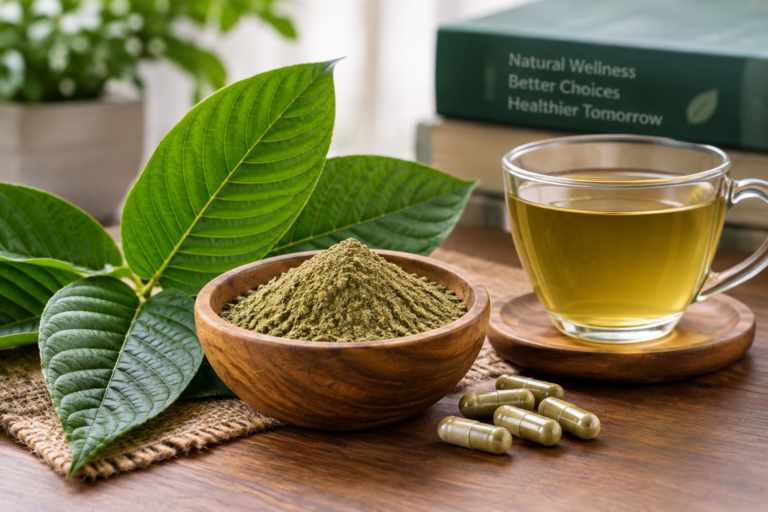
A lot of people start using kratom because it seems like the safer choice. It’s sold in gas stations and smoke shops, it comes from a plant, and the packaging rarely says much about risk. Then they try to stop for a few days and find out their body has other plans.
This article covers what kratom and 7-OH withdrawal actually feels like, how long it tends to last, why concentrated 7-OH products are harder to quit, and when it makes sense to get medical help instead of pushing through alone.
Struggling to stop kratom or 7-OH? Call us or visit our admissions page to talk through your options today.
Why Kratom Causes Withdrawal
Kratom comes from the leaves of Mitragyna speciosa, a tree native to Southeast Asia. Its main compounds, mitragynine and 7-hydroxymitragynine (7-OH), act on the same mu-opioid receptors that prescription painkillers and heroin act on. The body also converts some mitragynine into 7-OH during digestion, according to the National Institute on Drug Abuse.
That’s the part most people don’t realize. With daily use, the brain adjusts to having those receptors stimulated all the time. When the kratom stops, the brain is left short, and withdrawal is what that shortage feels like.
7-OH products make this sharper. These are tablets, shots, and gummies built around a concentrated dose of 7-OH, often much stronger than anything in plain kratom leaf. People who move from leaf powder to 7-OH products frequently describe dependence that builds faster and withdrawal that feels closer to quitting a prescription opioid.
Common Kratom and 7-OH Withdrawal Symptoms
Withdrawal looks different from person to person, depending on how much was used, for how long, and whether it was leaf, extract, or 7-OH. These are the symptoms people report most often.
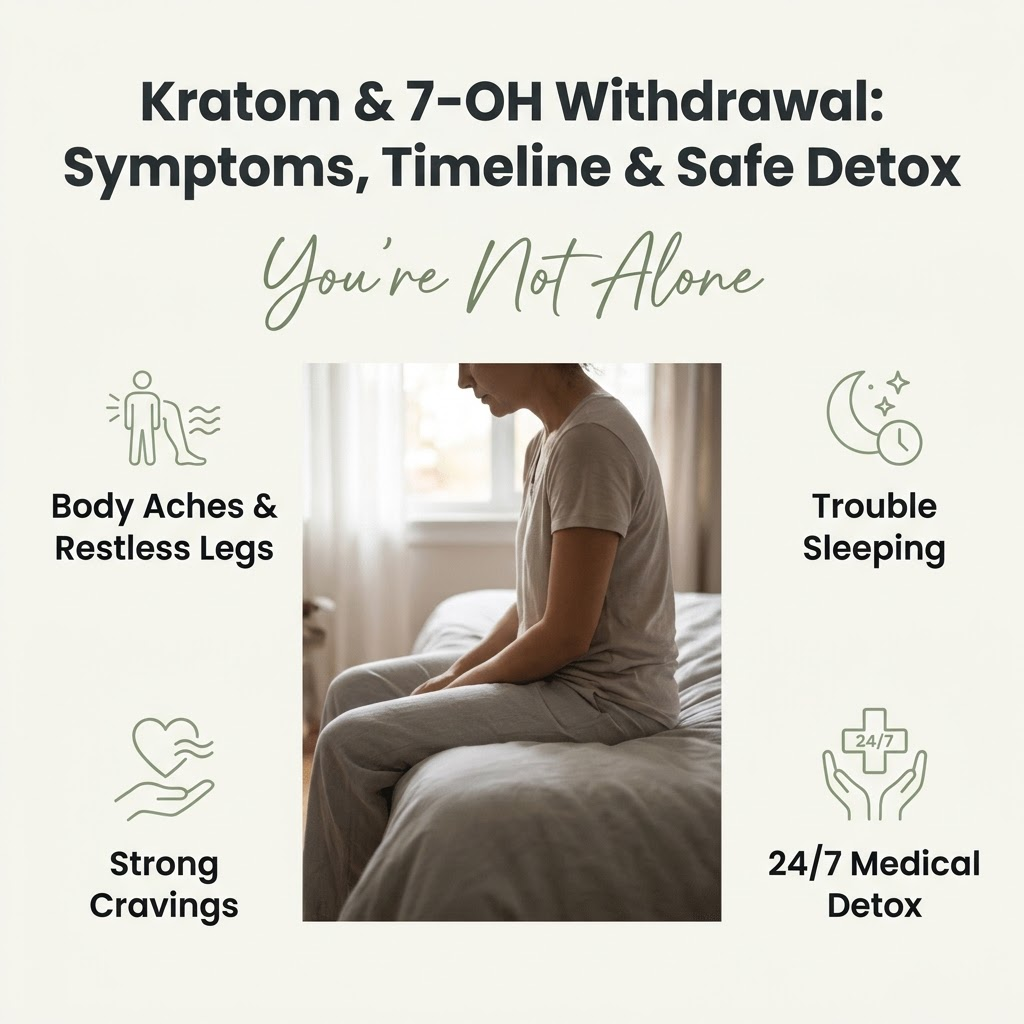
Body Aches and Restless Legs. Deep muscle aches, joint pain, and a jumpy, can’t-sit-still feeling in the legs, often worst at night.
Trouble Sleeping. Insomnia is one of the most common complaints and often one of the last symptoms to fade.
Flu-Like Symptoms. Runny nose, watery eyes, sweating, chills, and goosebumps, much like the early stage of opioid withdrawal.
Stomach Problems. Nausea, diarrhea, and stomach cramps are common in the first few days.
Anxiety, Irritability, and Low Mood. Many people feel on edge, short-tempered, or flat. For anyone who started kratom to manage anxiety or depression, those feelings can come back stronger for a while.
Strong Cravings. The urge to use again just to make the symptoms stop is usually what ends a home quit attempt, not the symptoms themselves.
How Long Does Kratom Withdrawal Last?
There’s very little formal research on the kratom withdrawal timeline, so the pattern below reflects what people and treatment providers commonly describe rather than a fixed schedule.
The First Day
Symptoms usually begin within about 12 to 24 hours of the last dose. Restlessness, a runny nose, and anxiety tend to show up first.
Days Two Through Four
This is usually the hardest stretch. Body aches, stomach problems, sweating, and insomnia often peak here, and cravings are at their strongest.
The End of the First Week
For most people, the physical symptoms ease noticeably by the end of the first week.
The Weeks After
Sleep problems, low energy, low mood, and cravings can hang on for weeks. This is the stretch where relapse often happens, because the person feels “done” with withdrawal but doesn’t feel normal yet.
Heavy daily use, extracts, and 7-OH products tend to make every stage more intense and can stretch the timeline out.
Why Quitting Kratom Alone Often Doesn’t Work
Kratom withdrawal is not usually considered life-threatening the way alcohol or benzodiazepine withdrawal can be. That’s exactly why so many people try to tough it out at home. The problem is that most attempts don’t end because the person can’t survive the symptoms. They end on day two or three, when one dose would make everything stop.
Home quitting also misses anything happening underneath. Someone who started kratom to come off opioids, or to manage chronic pain, anxiety, or depression, still has that problem when the kratom is gone. Without a plan for it, going back to kratom is often the path of least resistance.
There are also no FDA-approved medications specifically for kratom withdrawal. That doesn’t mean nothing helps. It means the right approach depends on a physician looking at the whole picture, including how much was used and what else is going on medically.
What Medical Detox for Kratom Looks Like
Medical detox gives someone 24/7 monitoring through the worst of withdrawal, with a care team that can treat symptoms as they come up instead of leaving the person to white-knuckle it. Here’s what our kratom and 7-OH detox program in Houston involves.
A Medical Assessment First
Every plan starts with a clinical assessment of how long and how often kratom or 7-OH was used, which products, physical health history, and any mental health concerns. The detox plan is built from that, not from a generic protocol.
Symptom Management
Medication is used when appropriate to take the edge off symptoms like nausea, sleeplessness, and anxiety, alongside hydration and nutritional care. The goal is to keep the person comfortable and stable, not just get them through it.
Care for Anxiety and Depression Too
If kratom use started alongside anxiety, depression, or another mental health concern, the team treats both together. Ignoring that side is one of the most common reasons people go back to kratom.
A Plan for What Comes Next
Detox handles the physical dependence. Most people do better when they move straight into residential treatment, where therapy, group counseling, and relapse prevention planning work on the reasons kratom took hold.
For a broader look at the warning signs of dependence, our guide to kratom addiction signs and risks covers what families tend to notice first.
What About the New 7-OH Rules?
Federal rules around 7-OH are changing. In October 2026, the DEA published a notice of intent to temporarily place 7-OH and a related compound in Schedule I when products contain them above a set threshold, with the order expected on or after November 13, 2026. Texas already treats products where 7-OH makes up more than 2% of the alkaloid content as illegal, and the Texas Attorney General has sued retailers selling high-potency products, according to ABC13. If you rely on 7-OH and your supply is about to disappear, that’s a strong reason to plan a supervised 7-OH detox now rather than face sudden withdrawal later.
Helping Someone Through Kratom Withdrawal
Take It Seriously. “It’s just a plant” makes people feel judged and keeps them quiet. Withdrawal is real, even when the substance was legal to buy.
Don’t Push a Cold-Turkey Quit. Stopping abruptly at home after heavy 7-OH use is when people are most likely to relapse. Encourage a medical evaluation first.
Help With the Practical Side. Offering to make the call, drive to an assessment, or check insurance coverage removes a lot of the friction that stops people from starting.
When Should You Get Help for Kratom Withdrawal?
If someone has tried to cut back and couldn’t, uses kratom or 7-OH every day, or needs more to get the same effect, it’s time to talk to a professional. The same goes for anyone using 7-OH products alongside other opioids, benzodiazepines, or alcohol. An evaluation doesn’t lock anyone into treatment. It just tells you what kind of support actually fits.
Call Us At Kemah Palms for Support
Kemah Palms Recovery offers a medically supervised kratom and 7-OH detox program in the Houston area, followed by residential treatment for people ready to stay off kratom for good. Our clinical team can explain what detox would look like for your situation before you commit to anything. To talk through options for yourself or someone you love, call us or visit our admissions page. Your call is private and confidential.