Walk into a smoke shop or gas station in Texas and you may see it sitting there almost casually: small foil packets, bottles, capsules, even little extract shots labeled kratom. It is usually marketed as a “natural” pick-me-up. For some people, it starts out that way — a little more energy, some relief from pain, or simply something they think is easier to manage than prescription medication. The problem is that regular use can turn into dependence before they really notice the shift. If kratom has become part of your everyday routine, especially something you take just to feel normal or keep withdrawal away, it is worth taking a closer look.
Our team can talk through the next steps with you, including helping verify insurance coverage, whether the concern is your own kratom use or someone you care about.
What Is Kratom, Exactly?
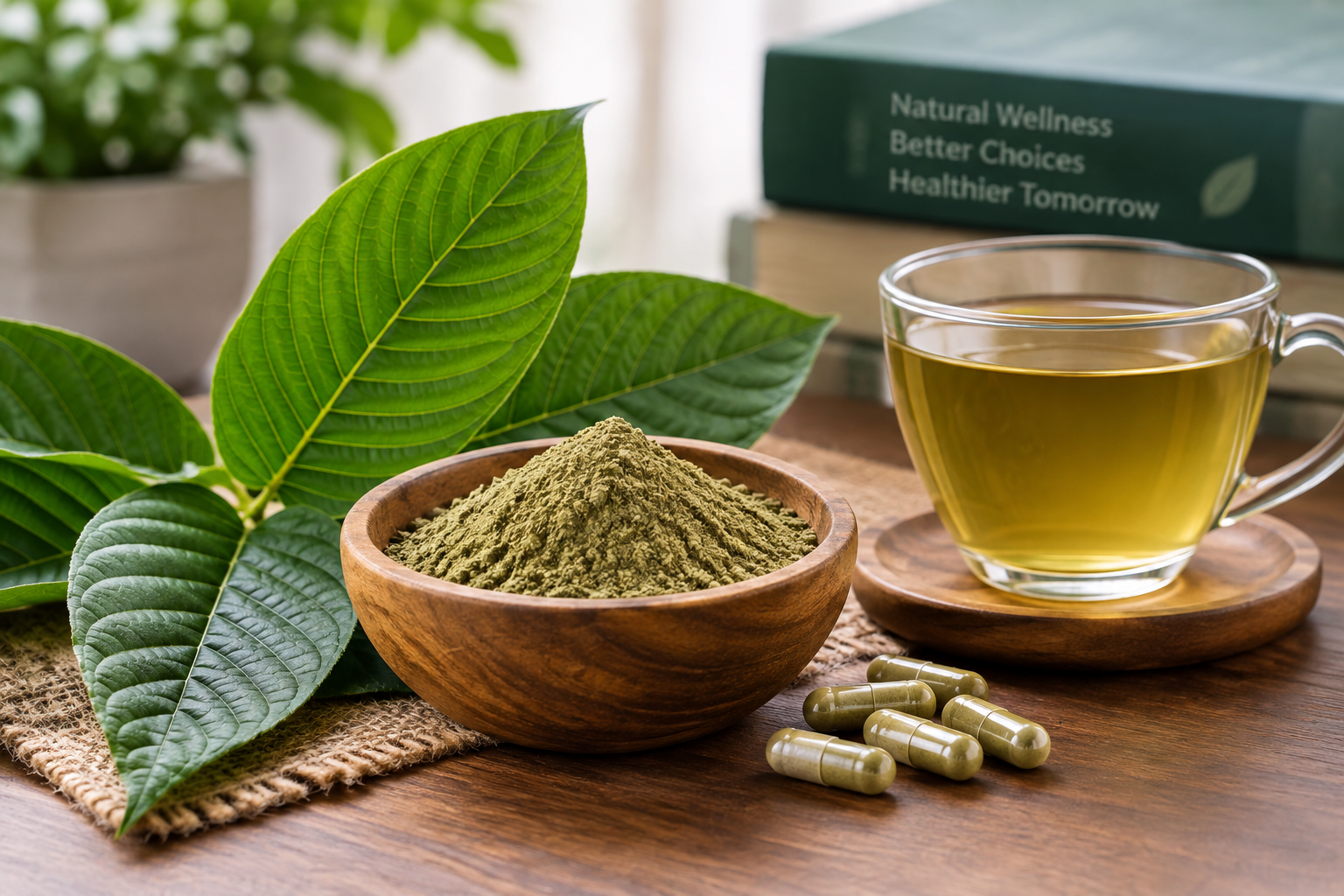
Kratom comes from Mitragyna speciosa, a tree native to Southeast Asia. The leaves have been used there for generations, including by laborers looking for a mild boost in energy. In the United States, though, the products people buy are often processed, concentrated, and packaged in forms that are quite different from traditional leaf use.
Two of the main compounds people hear about are mitragynine and 7-hydroxymitragynine, usually shortened to 7-OH. They act on opioid receptors in the body. At lower amounts, some people describe kratom as more stimulating. At higher amounts, the effects can become more opioid-like, including sedation and pain relief. That is one reason the assumption that something is simply a “natural” product can be misleading.
There is another issue: kratom products are not standardized the way approved medicines are. What the label says and what is actually in a product do not always line up, and potency can vary from one product to another.
How This Sneaks Up on People
Most people do not start out thinking, “I am going to become dependent on this.” More often, there is a reason behind the first use: ongoing pain, anxiety, low energy, or an attempt to manage opioid withdrawal without entering a formal treatment program. In the beginning, kratom may seem to solve the immediate problem. That can make it easy to keep using.
Then tolerance can creep in. The amount that used to work no longer feels like enough, so the dose increases. Without medical supervision, there is no one checking how quickly that is happening or whether the person is moving into a riskier pattern. What started as occasional use can become several doses a day.
Kratom Products Aren’t All the Same
Kratom products are not interchangeable, and the form matters. Plain leaf powder is generally considered less concentrated than extracts, although that does not make it harmless. Capsules are often just a more convenient way to take powdered kratom. Extract shots and concentrated 7-OH products are another matter: they can be much more potent and can make it easier to develop a pattern of dependence. For some people, the progression is gradual — powder first, then stronger products as tolerance increases — until the amount being used is far beyond what they originally intended.
Signs Someone Might Be Dependent
Kratom dependence can be easy to miss because it does not always match the image people have of addiction. You may not see obvious signs such as needles or prescription bottles. Instead, pay attention to changes in how often the person uses it, what happens when they cannot use it, and how much of their day starts revolving around getting the next dose.
- Needing larger amounts to get the same effect, or moving from powder to stronger extracts because the old amount no longer works
- Taking kratom several times a day mainly to feel normal or functional rather than for the original reason it was started
- Becoming irritable, restless, achy, anxious, or otherwise uncomfortable when a dose is delayed or unavailable
- Spending increasing amounts of time or money trying to find kratom, including going from store to store to get it
- Making a genuine attempt to cut back and finding that you cannot stick to it
- Continuing to use even when it is clearly affecting sleep, finances, work, relationships, or other parts of daily life
The Health Risks Nobody Puts on the Label
Being legal and plant-derived does not automatically make kratom safe. Regular or heavy use has been associated with a number of serious health problems, including:
- Liver injury, including documented cases of drug-induced liver injury
- Seizures, particularly with higher amounts or concentrated products
- Changes in heart rhythm
- Dangerous interactions when kratom is combined with alcohol, benzodiazepines, or other depressant substances
- Respiratory depression at high doses, which can become life-threatening
7-OH deserves particular attention because it is much more concentrated than plain kratom leaf. It acts on the same opioid receptors, but the effects can be substantially stronger. The lack of standardization adds another problem: two products that look similar on a shelf may not have the same potency. That unpredictability is part of the risk.
What Withdrawal Actually Feels Like
Once the body has adapted to regular kratom use, stopping or cutting back can bring on withdrawal. People may experience muscle aches, trouble sleeping, irritability, nausea, sweating, and strong cravings. The pattern can resemble opioid withdrawal, although the severity and duration can vary from person to person.
This is also where many attempts to quit start to break down. When the discomfort becomes intense, taking kratom again can feel like the quickest way to make it stop. That does not mean the person lacks willpower. It means dependence can make stopping difficult, which is exactly why medical support can matter.
Wait Isn’t Kratom Legal?
In Texas, kratom can currently be bought, sold, and possessed, and it is not regulated like alcohol or tobacco. Some cities in other parts of the country have adopted their own restrictions, but Texas has not banned kratom statewide.
The important point is that legality and safety are two different questions. The FDA has not approved kratom for medical use and has issued warnings about its risks. The fact that a product can be sold does not mean it has gone through the same safety and efficacy review as an approved medication.
When Kratom Is Really About Opioids
For some people, kratom enters the picture because they are trying to get away from prescription or illicit opioids, or because they are trying to manage withdrawal on their own. Because kratom acts on opioid receptors, it may temporarily reduce some withdrawal symptoms. That temporary relief can make continued use feel like a solution.
The catch is that replacing an established opioid problem with an unregulated substance can leave the underlying dependence unresolved. When opioid use disorder is part of the picture, medically supervised treatment — including medication-assisted treatment when clinically appropriate — is generally a more reliable path than trying to manage it alone with kratom.
If that’s how kratom entered the picture for you or someone you love, say so when you reach out for help. It changes what an effective treatment plan looks like.
Quick Questions People Ask
Can you actually overdose on kratom?
Yes. The risk is higher with concentrated extracts and 7-OH products, at high doses, or when kratom is combined with alcohol or other depressants. Severe toxicity can include respiratory depression.
How long does withdrawal last?
There is no single timeline that fits everyone. Withdrawal can be more intense in the first several days and then gradually improve, while sleep problems or cravings may last longer. How long it lasts depends on factors such as how much was being used, how often, and for how long. A medical provider can give a more useful estimate for an individual situation.
Is treatment different from opioid addiction treatment?
The overall approach is similar: medical support for withdrawal when needed, treatment for the issues that were underneath the substance use, and a plan for ongoing recovery. What helps is working with a team that understands how kratom use and withdrawal can present, rather than treating it as an afterthought.
Medical Detox First
With medically supported detox, someone is monitoring symptoms and can adjust care as needed instead of trying to manage every change alone. That support can be especially important during the first few days, when withdrawal may be at its most difficult.
Then, Dealing With the Actual Cause
If kratom began as a way to deal with pain, anxiety, opioid withdrawal, or another problem, that issue does not disappear simply because the kratom does. Treatment needs to address the reason it became useful in the first place. That may involve therapy, medical care, or both.
Structure While It Matters Most
The right level of structure depends on the person. Inpatient treatment may make sense for some situations, while intensive outpatient care may be appropriate for others. Either way, a steady routine, support from other people, and ongoing clinical oversight can make the early part of recovery easier to navigate.
Support That Doesn’t End at Detox
Detox is not the finish line. Therapy, peer support, relapse-prevention planning, and continued follow-up can help address the issues that remain after the physical withdrawal settles down. A longer-term plan gives recovery somewhere to go after the first difficult days are over.
If You’re Worried About Someone Else
Talking to someone you care about can be uncomfortable, particularly when they point to kratom’s legal status as proof that there is no problem. Try to keep the conversation focused on what you are actually seeing rather than turning it into an argument about the law. A few approaches tend to be more useful:
- Be specific instead of accusatory — explain the changes you have noticed rather than simply saying that you are worried
- Leave the legality argument aside and focus on how kratom is affecting their sleep, work, relationships, money, or daily routine
- Encourage them to speak with a provider or treatment team that has experience with kratom rather than assuming every program handles it the same way
- Make the first step concrete, such as offering to sit with them while they make a call or helping them look at treatment options
So, When Should You Actually Reach Out?
There does not have to be a crisis before you reach out. If occasional use has become daily use, stopping brings on withdrawal, or repeated attempts to cut back have not lasted, it is reasonable to ask for help now. Kratom dependence can become harder to manage the longer the pattern continues. Getting support earlier can make the process easier.
Call Us At Kemah Palms for Support
If kratom has become something you cannot easily put down — or someone you love cannot — you do not have to figure it out alone. Kemah Palms Recovery in Houston, Texas can provide confidential, judgment-free guidance about what treatment may look like for your situation, starting with our kratom and 7-OH detox program. Call us or visit our admissions page to get started.