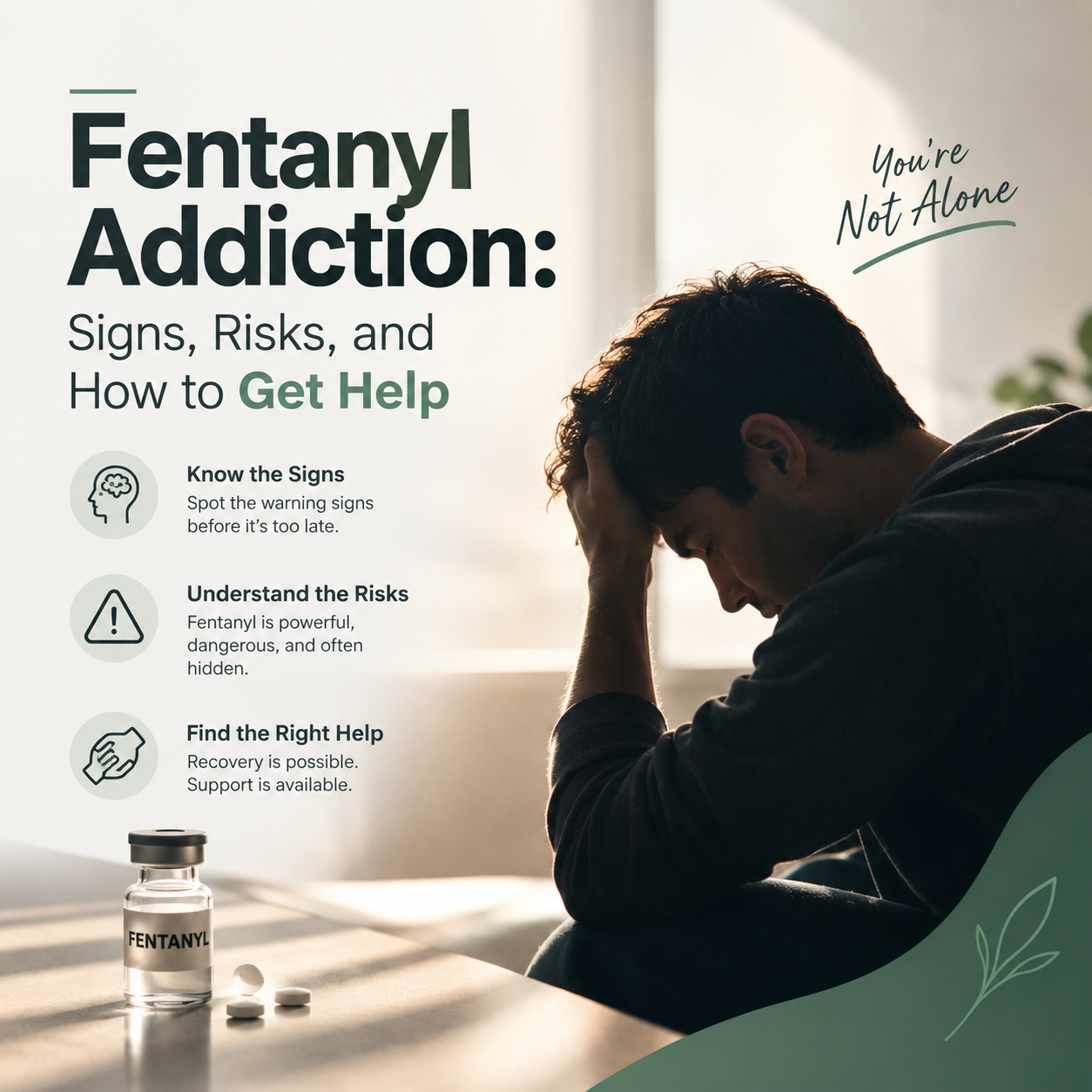
Fentanyl Addiction: Signs, Risks, and How to Get Help
A pill that looks exactly like an oxycodone tablet. A bag sold as heroin that never touched heroin at all. That’s where a lot of fentanyl exposure starts now. Not with someone looking for fentanyl by name, but with someone taking what they thought was something else. Fentanyl is a synthetic opioid, roughly 50 times stronger than heroin and 100 times stronger than morphine. The gap between a normal dose and a fatal one can come down to a few stray grains of powder. And fentanyl addiction doesn’t always look the way people expect opioid use to look. That’s a big part of why families miss it until things are already bad.
Why Fentanyl Hits Differently
Most opioids take weeks or months to build real dependence. Fentanyl can do it faster. Part of that is potency, part of it is how aggressively it locks onto the brain’s opioid receptors. Repeated use rewires brain activity so a person keeps getting pulled back toward the drug even as everything else falls apart around it: the job, the marriage, the health that keeps slipping. Tolerance builds fast. Soon the body needs fentanyl just to feel normal, and when the drug isn’t there, withdrawal shows up quickly enough that avoiding it becomes its own reason to keep using.
SAMHSA’s National Survey on Drug Use and Health puts the number of people aged 12 and up who misuse prescription fentanyl or use illegally manufactured fentanyl at hundreds of thousands a year. Realistically, that number is low. So much of today’s counterfeit pill and powder supply contains fentanyl that plenty of people never meant to take it at all.
Signs of Fentanyl Addiction
Clinically, fentanyl addiction falls under opioid use disorder. Nobody needs to check every box on a list for it to be real, a handful of these patterns showing up together is usually enough reason to have a real conversation:
• Using more fentanyl than planned, or using it more often
• Trying to cut back or quit and it not sticking
• Cravings strong enough to crowd out everything else
• More and more of the day spent getting, using, or recovering from it
• Work, school, or family responsibilities slipping because of use
• Hobbies and friendships that used to matter falling away
• Using in situations that are obviously unsafe
• Continuing even with clear harm in front of them, physical or emotional
• Needing more of the drug over time for the same effect
• Withdrawal symptoms when use gets cut back or stopped
Physically, fentanyl slows the central nervous system down. Watch for unusual drowsiness, pinpoint pupils, slow or shallow breathing, nodding off at strange moments. These matter both as signs of ongoing use and as warning signs an overdose is happening right then.
Exposure Without Knowing It
Not all of this is deliberate. Counterfeit pills pressed to look identical to prescription oxycodone, Xanax, or Adderall are increasingly turning up with fentanyl inside instead, and the dose swings wildly from pill to pill. Someone can take what looks like a familiar medication and have no real way to know how much fentanyl is actually in it, if any. That’s a big reason fentanyl harm now reaches well past people with a known history of opioid use. It’s reaching people who genuinely believed they were taking something else.
The Supply Isn’t What It Used to Be
Street fentanyl today is not the same product it was even two or three years ago. It’s increasingly cut with veterinary sedatives that were never approved for humans. Xylazine, sometimes called “tranq,” has worked its way through much of the fentanyl supply in major metro areas, and a newer sedative called medetomidine is spreading even faster behind it. Here’s the problem: neither one is an opioid, and naloxone, the medication that reverses opioid overdoses, does nothing for what these sedatives do to the body. Someone can follow the overdose-response playbook exactly and still not get the result they’re expecting. Xylazine brings its own separate risk too, severe skin wounds at injection sites that heal slowly if at all.
What Withdrawal Actually Looks Like
Fentanyl withdrawal starts fast and hits hard. That’s the potency talking, and how quickly the body builds dependence on it. Symptoms usually kick in somewhere between 8 and 24 hours after the last dose, though fentanyl stored in body fat can delay it or bring it back in waves. Days one through three tend to be the worst of it: nausea, vomiting, diarrhea, chills, sweating, aching muscles and bones, plus anxiety, insomnia, and cravings strong enough to make getting through it alone genuinely hard. Acute symptoms mostly ease up within about a week. Some of what follows, disrupted sleep especially, low mood, can drag on for weeks past that.
Unsupervised quit attempts fail for exactly this reason. The discomfort becomes its own excuse to use again, and relapsing after time off the drug is especially dangerous because tolerance drops fast. An amount that felt manageable a month ago can kill someone now. Withdrawal on its own rarely threatens a healthy adult’s life, but dehydration during an untreated stretch of it can, and so can overdose after a relapse. Medically supervised detox exists for exactly this: monitoring vitals, treating symptoms as they come up, using medications like buprenorphine, methadone, or clonidine to keep the process safer and a lot less brutal.
Treatment That Actually Works
Detox handles the physical side. On its own, though, it’s not a full course of treatment, withdrawal management without a plan for what comes next carries a much higher risk of relapse and overdose. Real treatment layers medical support with structured therapy over time, sized to how severe things have gotten.
For a lot of people it starts with medically supervised detox: round-the-clock monitoring and medication support to get through acute withdrawal as safely as possible. From there, medication-assisted treatment with buprenorphine, methadone, or naltrexone cuts cravings and withdrawal severity, and tends to produce meaningfully better long-term outcomes than detox alone. Often those medications stay in the picture for months or years, not just the first rough week. Partial Hospitalization and Intensive Outpatient Programs add structured day treatment or several-times-a-week therapy on top of the medical foundation, built for people who need real structure but not an overnight stay. And recovery doesn’t stop when a program ends, ongoing group sessions, case management, and relapse-prevention planning are what help people hold onto progress once regular life starts back up.
One genuinely good sign in all of this: after years of climbing steadily, U.S. overdose deaths have started coming down, and the latest provisional CDC numbers show a double-digit drop year over year. That doesn’t happen on its own. More people are reaching treatment, and staying in it.
What Families Notice First
Loved ones usually sense something’s off long before they can name it. Secrecy around a phone or belongings that wasn’t there before. Money that doesn’t add up. Pinpoint pupils or drowsiness at strange hours. Pulling back from people and routines that used to matter. Promises to cut back that quietly don’t hold. No single one of these confirms fentanyl use on its own, but a few showing up together is reason enough for a direct, calm conversation, and for calling a treatment provider to ask how to even start having it.
Questions People Actually Ask
How long does fentanyl stay in your system? Depends on how often someone uses, how much, and their own metabolism, but it typically shows up in urine testing for one to three days after last use, longer with heavier or more prolonged use since it builds up in fat tissue and releases slowly from there.
Can someone overdose on fentanyl without knowing they took it? Yes, and it happens often. Fentanyl gets mixed into counterfeit pills and other drugs so frequently now that unintentional exposure is one of the leading drivers of fentanyl overdose deaths.
Is fentanyl withdrawal dangerous by itself? Rarely life-threatening for a healthy adult on its own, but severe dehydration during an untreated stretch of it, and overdose risk after a relapse, are both real dangers, which is exactly why medical supervision still matters even when withdrawal feels survivable.
What’s actually the first step? Usually just a conversation with a treatment provider about current use and health history. That conversation is what decides whether medically supervised detox, a structured day program, or outpatient counseling is the right place to start.
Reaching Out
If any of this sounds familiar, whether it’s your own life or someone you know, it’s worth having the conversation sooner rather than later. Fentanyl’s unpredictability means waiting for a clearer sign isn’t the safe bet it might be with other substances. Kemah Palms offers medically supervised detox, PHP and IOP programs, and a full year of no-cost aftercare for adults working through opioid use, with care built around what someone actually needs instead of a fixed program everyone gets run through the same way.